How to Choose Crawl Space Insulation Types
- William McKracherne
- Jul 16
- 4 min read

Picking the right crawl space insulation isn't just about filling a hole. The material you choose affects your energy bills, moisture levels, and even your home's structure. Here's how to decide.
Step 1: Assess Your Crawl Space Conditions
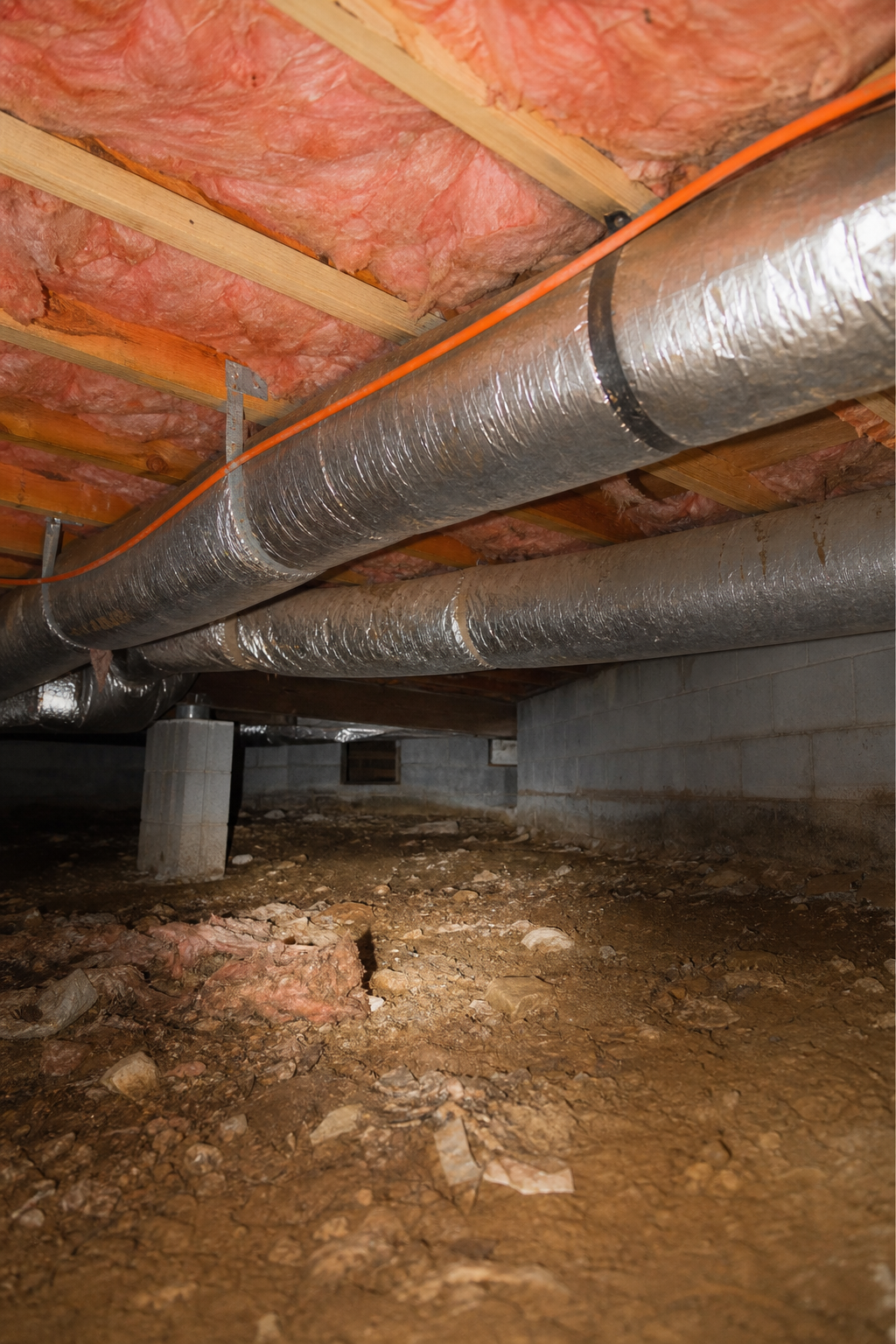
Before you buy any insulation, look at your crawl space. Is it vented or sealed? Vented crawl spaces have vents in the walls that let outside air in. Sealed ones don't. Each needs a different approach.
Check for standing water, damp spots, or mold. If you see any, fix those problems first. Insulation won't help if moisture is rotting your floor joists.
Also check the foundation walls and floor joists. Look for gaps, cracks, or signs of pests. A professional home inspection can catch issues you might miss. For a thorough evaluation, consider a professional assessment from LGFMH Construction .
Key Takeaway:Always address moisture and structural problems before adding insulation.
Step 2: Compare Insulation Material Types
The main crawl space insulation types are fiberglass batts, rigid foam board, spray foam, and mineral wool. Each has different strengths and weaknesses.
Material | R-Value per Inch | Cost per Sq Ft | Difficulty |
Fiberglass batts | R-3.0–R-4.3 | $0.30–$1.50 | Easy |
Rigid foam board | R-4.0–R-6.5 | Varies | Moderate |
Open-cell spray foam | R-3.6 | $0.44–$3.20 | Hard |
Closed-cell spray foam | R-6.5 | $0.44–$3.20 | Hard |
Mineral wool | R-3.2–R-4.2 | $1.40–$3.10 | Moderate |
According to Angi, fiberglass batts are the cheapest option and easy to install yourself. But they sag if they get wet. Rigid foam board gives you a high R-value at a low price. It's great for foundation walls. Spray foam seals air leaks best, but it's expensive and requires a pro.
Closed-cell spray foam has the highest R-value per inch among common options. It also acts as a vapor barrier .
Pro Tip:If you need a vapor barrier , closed-cell spray foam does double duty. No extra plastic sheeting needed.
Step 3: Evaluate R-Value and Cost by Climate
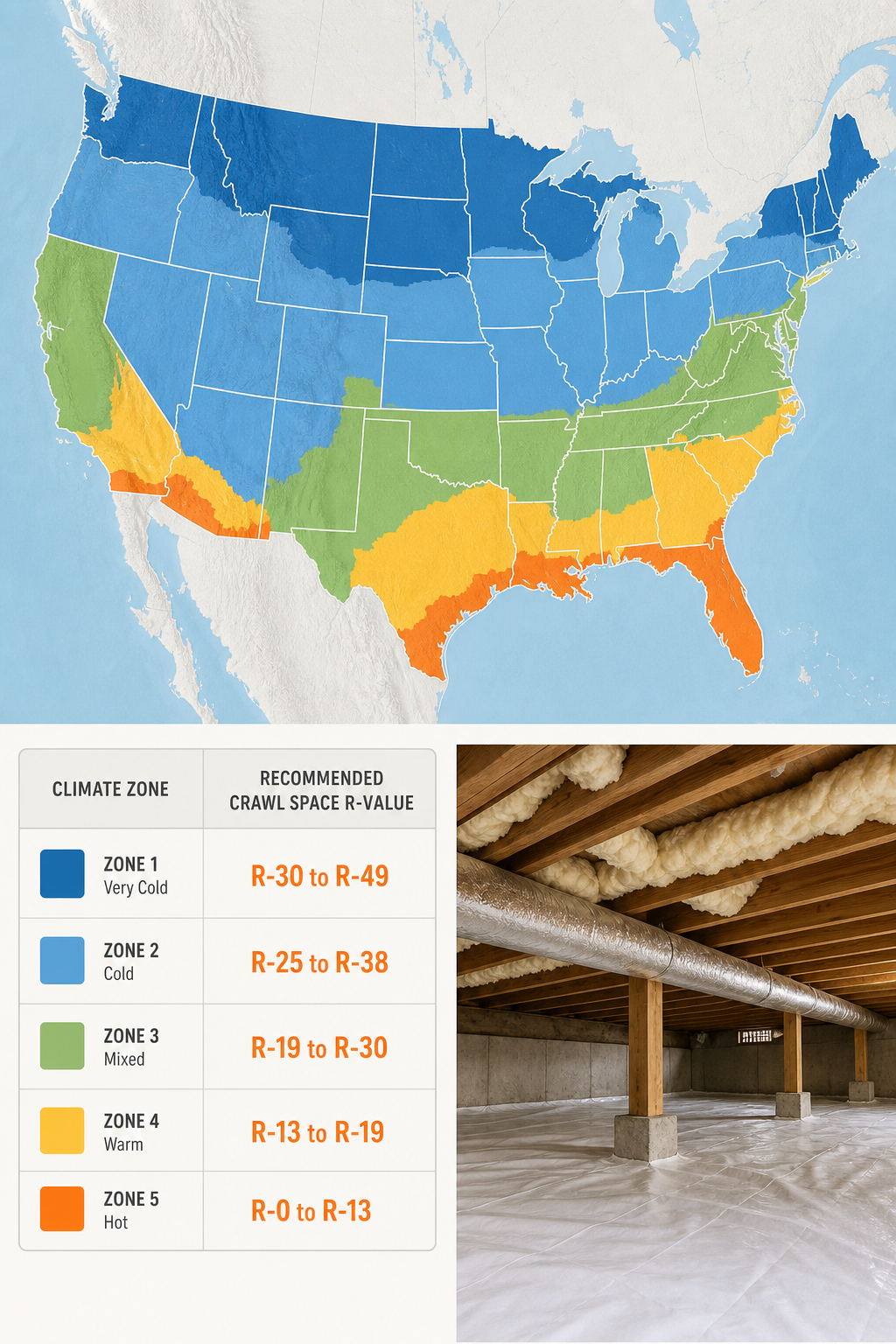
Your climate determines the R-value you need. Warmer zones can get by with R-11 to R-19.
The right R-value can cut your energy bills by up to 15%. In cold areas, go with high-R materials like closed-cell spray foam or thick rigid foam. In mild climates, fiberglass batts or cheaper rigid foam work fine.
Cost matters too. Rigid foam board provides R-6.5 per inch, making it a cost-effective option. That's a better value than spray foam if you don't need the air-sealing benefits. But if your crawl space is drafty, pay more for spray foam to seal leaks.
R-6.5Maximum R-value per inch from rigid foam board — a strong value
Step 4: Decide Between DIY and Professional Installation
Some materials are DIY-friendly. Fiberglass batts are easy to cut and place. Just wear gloves and a mask. Rigid foam board can be cut with a utility knife and secured with adhesive or fasteners. Both let you save on labor.
Spray foam is another story. It needs special equipment and training. Open-cell and closed-cell spray foam both require a pro. Professional installation is recommended for spray foam because of the health risks and precision needed.
Mineral wool is heavy but manageable for a determined DIYer. It's denser than fiberglass and resists water better. But it costs more.
If you're not sure, get a quote from a pro like LGFMH Construction . They can install all types of crawl space insulation and make sure it's done right.
Key Takeaway:DIY fiberglass or rigid foam for simple jobs; hire a pro for spray foam or complex moisture issues.
Step 5: Follow Installation Best Practices
Good installation makes all the difference. Start with a vapor barrier on the floor if you have a dirt crawl space. Overlap the sheets by 12 inches and seal seams with tape. Extend it up the walls a few inches.
For foundation walls, use rigid foam board sealed with spray foam at edges. Make sure there are no gaps. For floor joists, fit batts snugly between the joists. Use wire hangers to hold them in place.
Never compress insulation. Compressing it lowers the R-value. Cut it slightly larger than the cavity so it stays put.
Safety first: Wear a mask, gloves, and eye protection. Fiberglass and mineral wool can irritate skin and lungs. If using spray foam, ventilate the area well.
After installation, check for any missed spots. Use a flashlight to look for gaps. A professional inspection can catch problems. LGFMH Construction offers installation for all crawl space insulation types and can help you get it right the first time.
Frequently Asked Questions
What is the best insulation for crawl spaces?
The best insulation depends on your climate and budget. For cold climates, closed-cell spray foam or rigid foam board with a high R-value works best. For mild climates, fiberglass batts or rigid foam are cost-effective. Always add a vapor barrier if there's moisture.
How much does crawl space insulation cost?
Costs vary by material. Fiberglass batts run $0.30, $1.50 per square foot. Rigid foam board pricing depends on thickness and type. Spray foam can cost $3, $8 per square foot. Labor adds on top. Get multiple quotes from contractors.
Can I install crawl space insulation myself?
Yes, for fiberglass batts or rigid foam board. They're DIY-friendly. Spray foam and mineral wool are harder. Spray foam requires professional equipment. Mineral wool is heavy but doable. Watch online tutorials first.
What R-value do I need for my crawl space?
For cold climates, R-19 to R-30 is typically recommended; for mild ones, R-11 to R-19. Check your local building codes. Higher R-values mean better energy savings, but cost more upfront.
Should I encapsulate my crawl space before insulating?
Encapsulation (sealing vents and adding a heavy vapor barrier) is recommended if your crawl space has moisture issues. It prevents mold and improves insulation performance. Many pros do encapsulation and insulation together.
Conclusion
Choosing the right crawl space insulation comes down to your climate, budget, and moisture situation. Fiberglass and rigid foam are budget-friendly DIY options. Spray foam gives you the best air seal but needs a pro. Start with a thorough assessment, compare materials, and decide if you'll DIY or hire help. For expert installation and advice, reach out to LGFMH Construction.


Comments