How to Choose the Best Concrete Crack Repair Product for Driveways in 2026
- William McKracherne
- 2 days ago
- 7 min read

Cracks in your driveway don’t have to be a nightmare. You can fix them yourself with the right know‑how and the right product. In this guide you’ll learn how to pick the best concrete crack repair product for driveways, how to prep the surface, and how to apply and finish the repair so it lasts.
We examined 10 concrete crack repair products across 3 sources and found that the highest‑coverage sealant takes a full week to cure, while the fastest‑curing patch barely covers a square foot.
Step 1: Assess Cracks and Surface Condition
Before you buy the best concrete crack repair product for driveways, you need to know what you’re dealing with. Look at each crack and note its width, depth, and location. A hairline crack that’s under a quarter inch wide is usually just cosmetic. A crack wider than a quarter inch may be structural.
Concrete cracks happen for many reasons. Heavy cars, soil movement, and freeze‑thaw cycles all play a part. The guide from LRE Foundation Repair breaks down the causes and tells you when to call a pro. If you see cracks spreading outward, sinking slabs, or cracks that get bigger after rain, you probably have a structural issue.
Take a ruler and measure the crack. Write down the size. This info will help you match the crack to the right product type later. Also, check the surrounding area for water pooling or poor drainage. Water can slip into cracks and make them worse.
Here’s a quick tip: if the crack feels soft when you press a screwdriver into it, the concrete underneath may be crumbling. That means you’ll need a filler that can bond to loose material.
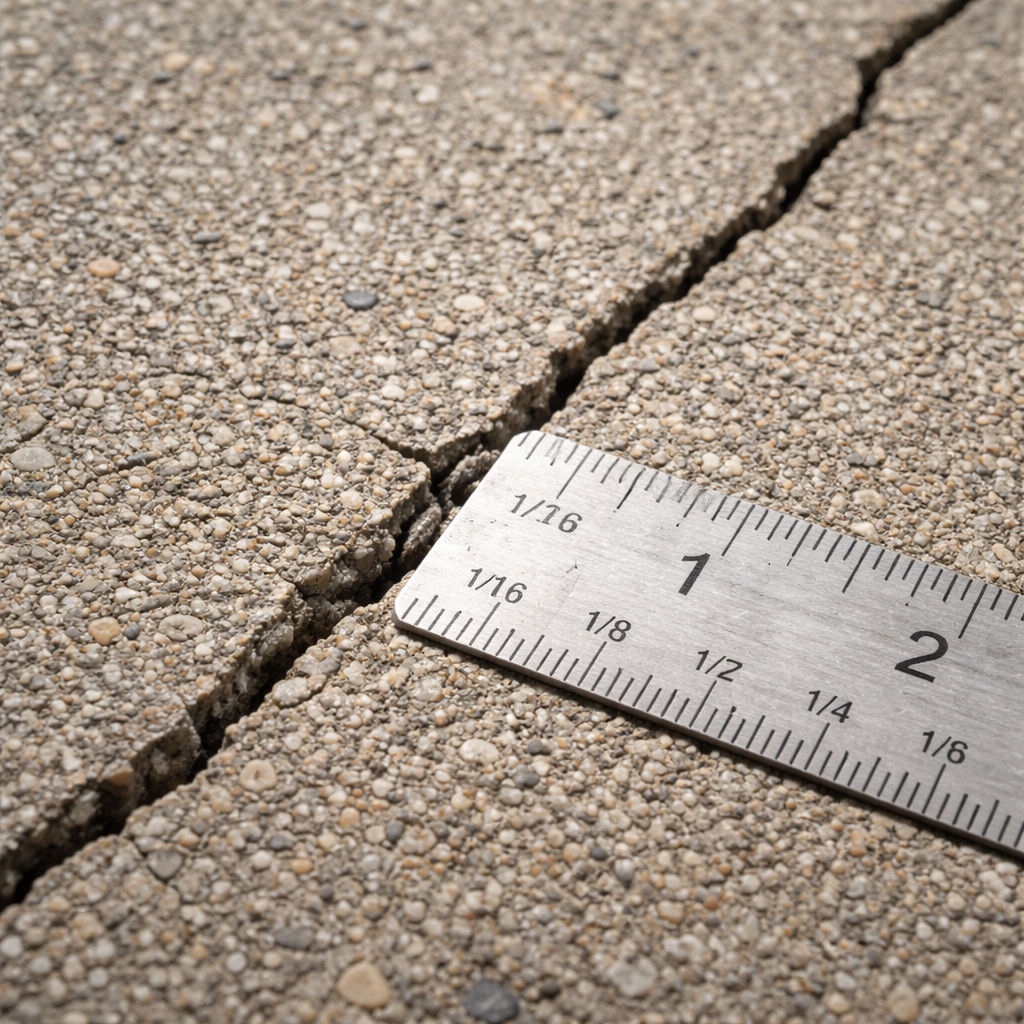
Once you have the measurements, compare them to the product specs. Some products only cover cracks up to 1 inch wide, while others can handle larger gaps. Knowing the exact size saves you from buying a product that won’t work.
And remember, a clean surface is key. Dust, oil, or old sealant will stop most repair products from sticking. That’s why you’ll spend a few minutes cleaning before you move on.
Step 2: Choose the Right Repair Product Type
The best concrete crack repair product for driveways depends on what kind of crack you have. In general you’ll see three main types: epoxy, polyurethane, and self‑leveling sealants. Each type has strengths and limits.
Type | Strength | Flexibility | Typical Cure | Best For |
Epoxy | Very high | Low | Hours to days | Structural cracks |
Polyurethane | High | High | 15 min to 2 h | Moving cracks |
Self‑Leveling Sealant | Medium | Medium | 3‑7 days | Wide shallow cracks |
Epoxy creates a hard, rock‑like bond. It’s great for cracks that won’t move much. The research shows epoxy products like Loctite PL self‑leveling sealant have the longest cure time (7 days) but also the biggest coverage.
Polyurethane, on the other hand, stays a bit flexible. It can expand and contract with temperature changes. Damtite Waterproofing SuperPatch cures in just 15 minutes, but it only covers 3 sq ft per container, so it’s best for tiny spots.
Self‑leveling sealants sit somewhere in the middle. They flow into the crack and level themselves, which makes them easy to use. Quikrete Concrete Crack Seal gives you 38 ft of coverage per quart and cures in 3 days , a good balance for most DIY driveways.
Here’s what the Dalinghaus Construction article says about epoxy vs. polyurethane. It notes that epoxy is rigid and best for structural fixes, while polyurethane is flexible and cures faster.
And the Bob Vila roundup tested many products and gave Sikaflex a high ease‑of‑use score even though it takes five days to cure. Use these insights to match product type to crack type.
Step 3: Prepare the Driveway for Application
Now that you know which product fits, it’s time to get the driveway ready. Preparation is what makes the best concrete crack repair product for driveways work long‑term.Start by sweeping the area. Remove leaves, dirt, and loose bits. A stiff broom or a leaf blower works fine. If there’s old sealant, scrape it off with a putty knife.
Next, clean the crack with a shop‑vac or compressed air. The LRE guide recommends a wire brush for stubborn grime. After brushing, wipe with a damp cloth and let it dry.
Check the weather. You need a dry day with temperature above 50 °F (10 °C). Moisture will stop many sealants from bonding.Once clean and dry, you can set up your tools. You’ll need a caulking gun for cartridges, a putty knife for paste, and safety gear , goggles and gloves.
Here’s a pro tip: if the crack is deeper than ½ inch, fill the bottom with a sand‑filled concrete patch first. This gives the surface product something solid to stick to.
And remember to keep a bucket of water nearby in case you need to rinse tools. Clean tools prolong the life of your equipment.
One more thing: we’ll add the only internal link here. For more detailed DIY tips, check out the Blog | Lgfmh Construction which walks through concrete patio repair step by step.
Step 4: Apply the Product Correctly
Applying the best concrete crack repair product for driveways the right way is what separates a quick fix from a lasting repair.
For cartridge‑type sealants, cut the tip at a 45° angle. The opening size should match the crack width. Insert the cartridge into a caulking gun and press the trigger steadily.
Start at one end of the crack and move slowly. Let the product flow into the crack without forcing it. If you see a gap, pause and let the material settle before moving on.
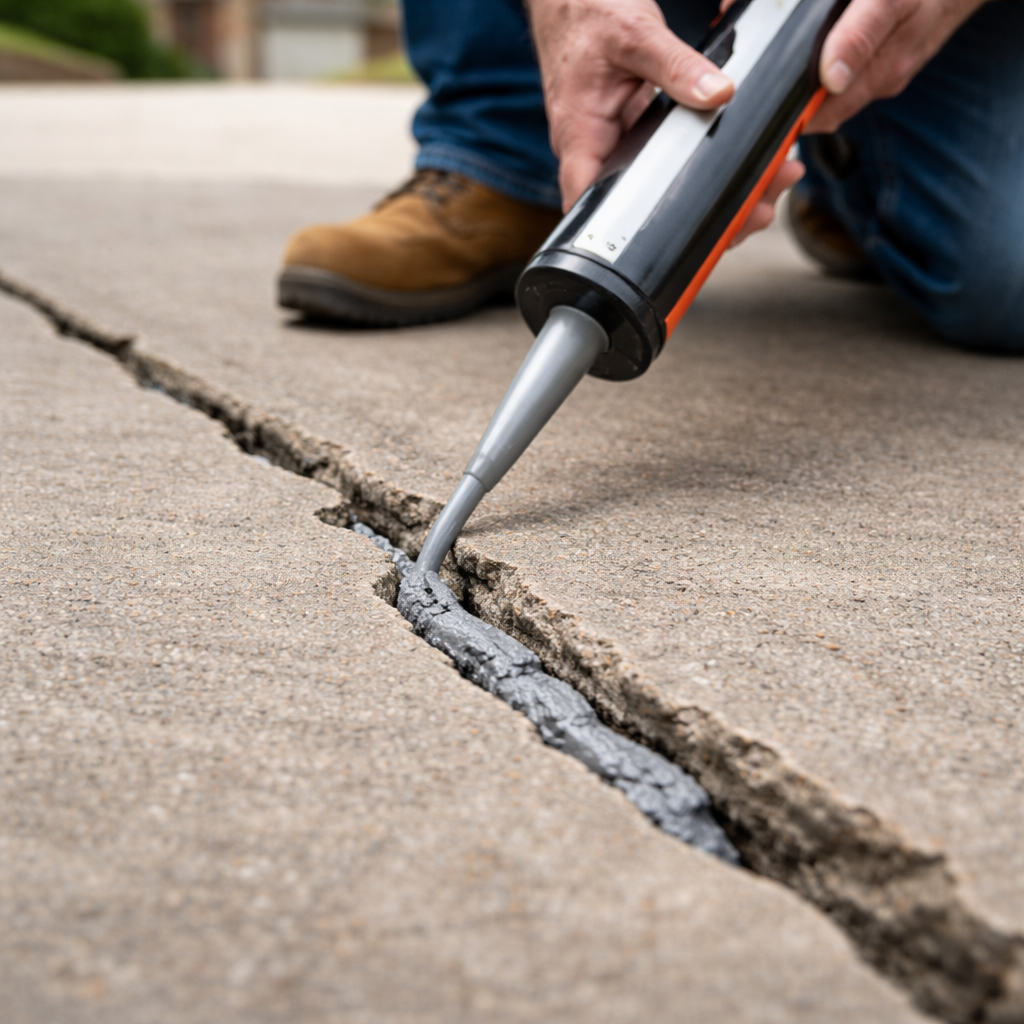
For paste‑type products like Red Devil (which isn’t driveway‑suitable) you’d use a putty knife. Scoop a small amount, press it into the crack, and smooth the surface.
After you fill the crack, use a plastic spreader to level the surface if needed. The goal is a smooth finish that blends with the surrounding concrete.
Watch the first video for a step‑by‑step demo of a self‑leveling sealant. It shows how to avoid air bubbles.
Then see the second video for tips on using a polyurethane patch that cures fast. Both videos stress the need to work quickly when the cure time is short.
And always wear a mask when sanding or cutting. Some sealants release fine dust that’s not good to breathe.
Step 5: Finishing Touches, Curing, and Maintenance
With the best concrete crack repair product for driveways in place, you now focus on curing and upkeep.
First, protect the area from rain. If the forecast calls for rain within 24 hours, cover the spot with a plastic sheet.
Most sealants need at least a few hours to set enough for light traffic. Loctite PL needs 7 days before you can park a car. Quikrete’s 3‑day cure lets you drive after the third day. Damtite’s 15‑minute cure lets you walk on it right away, but remember it only covered a tiny area.
After the cure period, you can wash the surface with a garden hose. Avoid pressure washers for the first week; they can disturb the new material.
Maintenance matters. The A‑1 Concrete seasonal maintenance calendar recommends checking for new cracks each season and resealing when needed. Regular cleaning and sealing keep water out and stop cracks from spreading.
Also, inspect drainage around the driveway. Make sure gutters direct water away, and add soil where the soil has washed away. This reduces future movement that can cause new cracks.
The Sikaflex+ Concrete Fix data sheet notes a final cure of 5‑7 days and a 3‑6 hour tack‑free time. Follow those times for best results.
FAQ
What is the fastest‑curing best concrete crack repair product for driveways?
The fastest cure among the products we studied is Damtite Waterproofing SuperPatch, which sets in 15 minutes. It’s great for tiny spots, but it only covers about 3 sq ft per container, so it’s not ideal for larger driveway cracks.
Can I use epoxy on a driveway that sees heavy traffic?
Epoxy gives a very hard bond, so it can handle heavy loads once fully cured. However, most epoxy products need several days to cure, and they are best for cracks that won’t move. For a driveway with regular traffic, a self‑leveling sealant like Quikrete offers a good mix of strength and reasonable cure time.
Is polyurethane safe to apply in rainy weather?
Polyurethane tolerates moisture better than epoxy. You can apply it when it’s damp, but you still want the surface to be free of standing water. The product will expand and fill hidden voids, which helps in wet conditions.
How often should I reseal my driveway after a repair?
Check the driveway twice a year , once in spring and once in fall. If you see new hairline cracks, reseal them within a week. A full reseal of the entire surface every 3‑5 years keeps water out and extends the life of the repair.
Do I need special tools to apply self‑leveling sealants?
A standard caulking gun works for most cartridges. You’ll also want a utility knife to trim the tip and a plastic spreader to smooth the surface. Safety glasses and gloves are a must.
What temperature range is best for curing?
Most sealants cure best between 50 °F and 85 °F (10‑30 °C). Below 50 °F, cure slows down dramatically. Above 85 °F, some products may cure too fast, leading to shrinkage.
Can I paint over the repaired crack?
Yes. Once the product reaches full cure , usually 5‑7 days for sealants and 24 hours for fast‑cure patches , you can paint or stain the area. The repaired spot will blend in if you use a concrete‑compatible paint.
Should I remove old sealant before applying a new product?
Definitely. Old sealant can prevent the new material from bonding. Use a scraper or a rotary tool to clean the crack, then vacuum out the dust before you apply the new repair product.
Conclusion
Choosing the best concrete crack repair product for driveways is about matching the crack type, the product’s coverage, and the cure time to your schedule. We saw that Loctite PL gives the most coverage but needs a week to cure, while Quikrete offers a balanced 3‑day cure and decent coverage. Fast‑cure options like Damtite exist, but they only cover tiny areas.
Start by assessing each crack, pick the right product type, prep the surface, apply with care, and let it cure properly. Then keep up with seasonal maintenance to stop new cracks from forming. Follow these steps and your driveway will stay smooth, safe, and looking great for years.


Comments