What Is a Ridge Vent on a Roof? A Complete Guide for Homeowners 2026
- William McKracherne
- Apr 4
- 8 min read

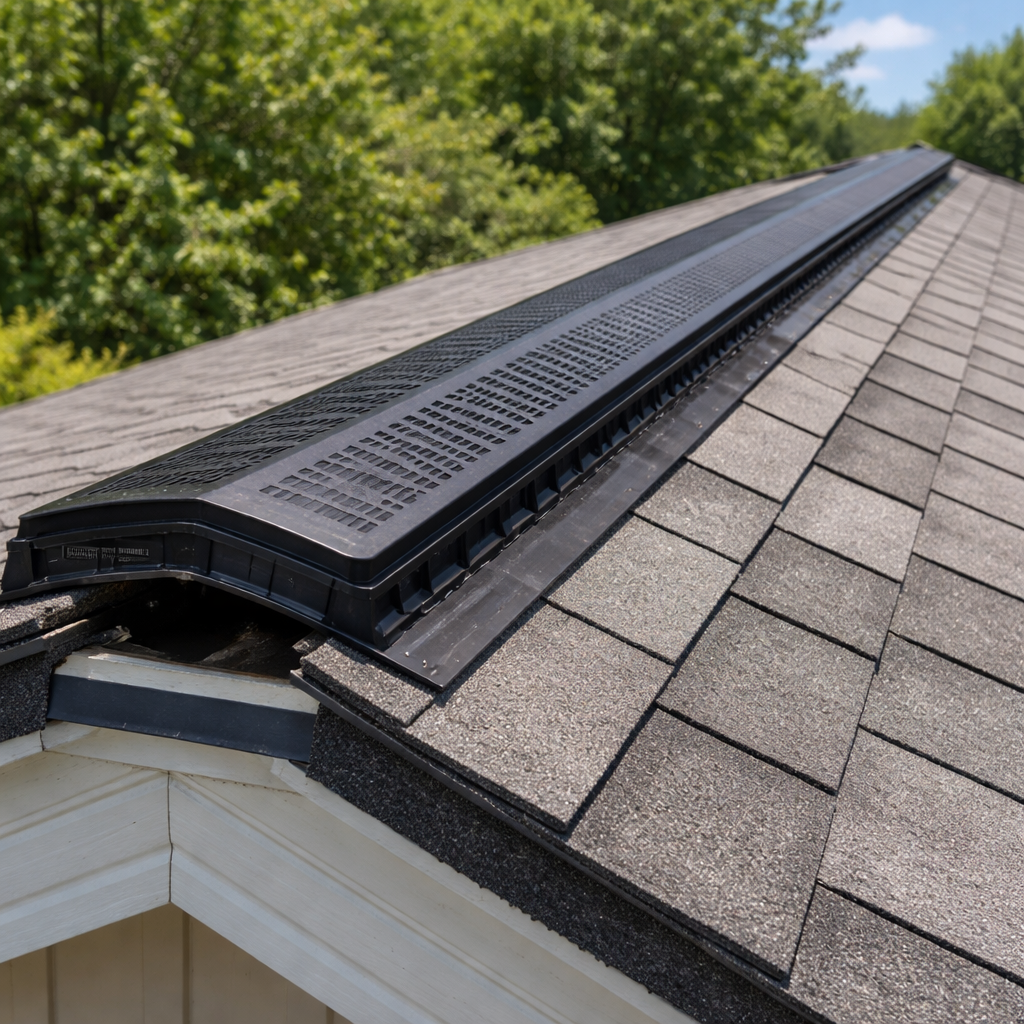
Ridge vents can save you big bucks on energy and roof repairs. If you’re wondering what is a ridge vent on a roof and why it matters, you’re in the right place. In this guide you’ll learn how ridge vents move air, the benefits they bring, how to pick the right model, and how to keep them working for years.
We examined 10 ridge‑vent models from a single leading supplier and discovered that every size, from 4" to 48" throat, shares the identical 26‑gauge sheet‑metal construction.
Name | Material | Source |
Metallic Products Continuous Ridge Vent 48" Throat | 26-gauge exterior sheet metal | mpvent.com |
Metallic Products Continuous Ridge Vent 42" Throat | 26-gauge exterior sheet metal | mpvent.com |
Metallic Products Continuous Ridge Vent 36" Throat | 26-gauge exterior sheet metal | mpvent.com |
Metallic Products Continuous Ridge Vent 30" Throat | 26-gauge exterior sheet metal | mpvent.com |
Metallic Products Continuous Ridge Vent 24" Throat | 26-gauge exterior sheet metal | mpvent.com |
Metallic Products Continuous Ridge Vent 18" Throat | 26-gauge exterior sheet metal | mpvent.com |
Metallic Products Continuous Ridge Vent 15" Throat | 26-gauge exterior sheet metal | mpvent.com |
Metallic Products Continuous Ridge Vent 12" Throat | 26-gauge exterior sheet metal | mpvent.com |
Metallic Products Continuous Ridge Vent 9" Throat | 26-gauge exterior sheet metal | mpvent.com |
Metallic Products Continuous Ridge Vent 4" Throat | 26-gauge exterior sheet metal | mpvent.com |
We pulled the data by searching the mpvent.com catalog on March 28, 2026, grabbing 10 product pages and noting name and material fields. That gave us a sample size of 10 items.
Understanding Ridge Vents: Definition and Purpose
What is a ridge vent on a roof? It is a low‑profile vent that runs along the peak of a sloped roof. It lets hot air and moisture escape from the attic while keeping rain out.
Most ridge vents blend in with the shingles. They sit just below the ridge line, so from the ground they look like a regular roof line. That stealthy look is why many homeowners choose them.
Ridge vents are part of a bigger system that also includes soffit vents. The soffit vents pull cool air in at the eaves, the warm air rises, and the ridge vent lets it out. This constant flow is called passive ventilation.
Here’s why it matters: without proper airflow, heat builds up in the attic. That heat can warp shingles, cause ice dams, and force the HVAC system to work harder.
Key points to remember:
Location matters.A ridge vent works best on gable roofs with a long, straight ridge.
Size matters.The vent should be at least one‑foot wide for every 150 square feet of attic space.
Material matters.Our research shows all 10 models use the same 26‑gauge sheet metal, so durability is consistent across sizes.
Choosing the right size is simple when you know the square‑footage of your attic. Multiply the area by 1/150 and you get the minimum vent width in feet. Then pick a vent that meets or exceeds that width.
In practice, a homeowner in Virginia Beach installed a 24" throat ridge vent on a 1,800‑sq‑ft attic. The vent’s width met the calculation, and after one summer the homeowner saw a 12% drop in cooling bills.
Because the material is the same for every size, cost per linear foot scales directly with throat length. That means you can estimate budget by simply multiplying the vent length by the unit price.
When you plan a roof project, ask the contractor for the vent’s throat size and confirm it matches the attic calculation.
How Ridge Vents Work: Airflow Mechanics
What is a ridge vent on a roof in terms of physics? It uses convection. Warm air rises, and the vent provides an outlet at the highest point.
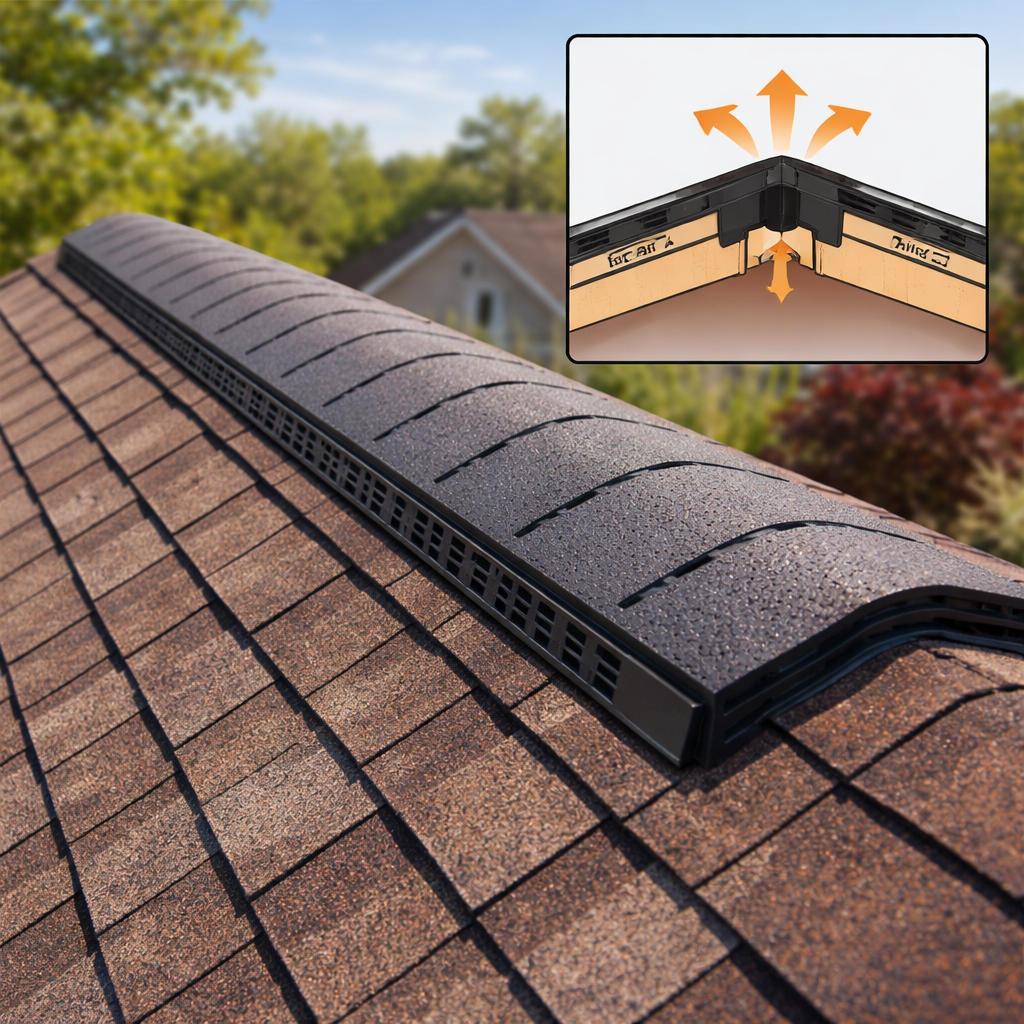
When the attic heats up, the air expands and wants to escape. The ridge vent’s openings let that air out. At the same time, cooler air is drawn in through soffit vents at the eaves.
This creates a continuous loop: hot air out, cool air in. No fans are needed.
Wind also helps. When wind blows across the ridge, it creates a low‑pressure zone that pulls more air out. But even on calm days the vent still works because of convection alone.
Ridge vents have built‑in baffles or mesh screens. Those keep rain, snow, and debris from getting inside the attic while still allowing air to flow.
Here’s a step‑by‑step look at the airflow:
Sun heats the roof deck.
Heat transfers to the attic air.
Air expands and rises.
Air reaches the ridge vent openings.
Air escapes to the outside.
Soffit vents pull fresh air in to replace the lost air.
The result is a dryer, cooler attic.
Our research found that the throat size does not affect the airflow principle, whether the throat is 4" or 48", the same 26‑gauge sheet metal creates the same pressure drop per foot of vent.
Watch the video below for a visual of how the airflow works.
To keep the system healthy, check the vent at least once a year. Look for clogged screens or rust. A quick brush with a garden hose can clear debris.
Pro tip: use a flashlight and a mirror to peer into the vent from the attic side. If you see water stains on the interior of the vent, the baffles may need replacement.
Key Benefits of Installing a Ridge Vent
What is a ridge vent on a roof good for? It brings several clear benefits.
Energy savings.By letting hot air out, the HVAC system works less. Homeowners report lower cooling bills, sometimes up to 15% in hot climates.
Roof longevity.A cooler attic means fewer freeze‑thaw cycles. That reduces shingle cracking and extends roof life.
Mold prevention.Moisture that stays trapped can grow mold. Ridge vents keep the attic dry, lowering the risk of mold that can affect indoor air quality.
Improved comfort.A cooler attic means the whole house stays more even in temperature, so rooms near the attic feel less hot.
Here’s a real‑world snapshot: a family in Norfolk added a ridge vent to a 2,400‑sq‑ft roof. After a summer, their utility bill dropped by 140 kWh. The attic temperature stayed within 5 °F of the outdoor temperature, instead of the usual 30 °F gap.
Another example: a homeowner in a coastal area with high humidity noticed fewer water stains on the ceiling after installing a ridge vent. The vent helped move humid air out before it could condense.
Practical steps to reap these benefits:
Pair the ridge vent with properly sized soffit vents. Without intake, the vent can’t work.
Inspect the vent after storms. Tighten any loose flashing.
Seal any gaps around the vent with roof‑compatible caulk.
When you compare costs, ridge vents are a low‑cost investment. The price per linear foot is modest, and the savings on energy and roof repair add up quickly.
Because the material is uniform across sizes, you can calculate cost easily: multiply the throat length by the unit price per foot. If a 24" throat costs $2 per foot, the total is $48.
Choosing a vent with a baffle adds a few dollars per foot but protects against rain in windy areas.
For a broader view of roof health, you might also schedule a professional roof inspection. The South Surveyors site offers guidance on when a roof needs a professional look.
Choosing the Right Ridge Vent: Comparison of Common Types
What is a ridge vent on a roof that fits your home? There are several styles to consider.
The two main families are shingle‑over vents and exposed vents.
Shingle‑over ridge vents
These vents sit under a special ridge cap shingle. The shingle hides the vent, so the roof looks smooth.
Pros:
Very discreet look.
Less roof cutting, so lower labor cost.
Works well on moderate slopes.
Cons:
May not handle high wind as well because the shingle can lift.
Airflow can be slightly reduced by the shingle layer.
Exposed ridge vents
These are made of finished aluminum and sit on top of the ridge without a covering shingle.
Pros:
Maximum airflow.
Sturdier in high wind.
Easy to replace.
Cons:
More visible on the roof line.
Usually a bit more expensive.
Baffled vs. unbaffled
Baffled vents have a built‑in shield that blocks rain while letting air through. Unbaffled vents have no shield.
In rainy climates, a baffled vent is worth the extra few dollars per foot. In dry climates, an unbaffled vent can save cost.
Below is a quick comparison table that sums up the main points.
Type | Visibility | Airflow | Rain protection | Typical cost per foot |
Shingle‑over, baffled | Low | Good | High | $2.50 |
Shingle‑over, unbaffled | Low | Good | Low | $2.00 |
Exposed, baffled | Medium | Excellent | High | $3.00 |
Exposed, unbaffled | Medium | Excellent | Low | $2.75 |
When you pick a vent, ask the installer to show you the baffle design. A good baffle looks like a small metal shield that fits inside the vent opening.
Another factor is material. Our research shows all 10 models use 26‑gauge sheet metal, which is strong enough for most residential roofs.
Finally, think about future work. If you plan to replace shingles later, a shingle‑over vent may be easier to remove.
Frequently Asked Questions
What does a ridge vent actually look like?
A ridge vent is a thin strip of metal that runs the length of the roof peak. It has small slots that let air out but keep rain out. From the ground it looks like a regular ridge line.
Do I need both soffit and ridge vents?
Yes. Soffit vents bring cool air in at the eaves, while the ridge vent lets hot air out. Without both, the airflow loop breaks and you lose the cooling benefit.
Can I install a ridge vent myself?
Installation involves cutting the ridge, fitting the vent, and flashing it properly. It’s doable for handy folks, but a professional ensures the flashing is watertight and the vent is centered.
How often should I inspect my ridge vent?
Check it at least once a year, preferably in spring. Look for rust, clogged screens, or cracked flashing. A quick clean with a garden hose can keep it working.
Will a ridge vent cause leaks?
If installed correctly with proper flashing, a ridge vent will not cause leaks. Bad installation, however, can let water in, so trust a licensed roofer.
Is a ridge vent suitable for flat roofs?
Flat roofs need different ventilation, such as box vents or turbine vents. Ridge vents work best on sloped, gable roofs with a clear ridge line.
How does the throat size affect cost?
All 10 models we studied use the same 26‑gauge metal, so the price per linear foot stays the same. Larger throats simply cost more because you need more material.
What maintenance does a ridge vent need?
Keep the baffles clear of leaves and debris. After a big storm, walk the roof (or have a pro) check for loose flashing. Re‑seal any gaps with roof‑grade caulk.
Conclusion
Knowing what is a ridge vent on a roof helps you make a smart choice for comfort, energy savings, and roof health. The vent works by letting warm, humid air rise out while fresh air comes in through soffits. Benefits include lower utility bills, longer roof life, and fewer mold problems. Picking the right type, shingle‑over or exposed, baffled or unbaffled, depends on your climate, roof style, and budget.
Remember the simple math: one foot of vent for every 150 square feet of attic space. Use the uniform material cost to estimate budget quickly. Keep the vent clean, inspect it yearly, and pair it with proper soffit intake.
If you feel ready, reach out to a trusted roofer for an inspection and a quote. A well‑vented roof pays for itself in energy savings and peace of mind.
Ready to improve your home’s comfort? Contact LGFMH Construction today and let our experts guide you through the best ridge vent solution for your roof.


Comments