How to Fix a Cracked Concrete Sidewalk: Step-by-Step Guide
- William McKracherne
- Jul 16
- 5 min read
You can fix a cracked concrete sidewalk yourself in a weekend. The key is proper prep, the right materials, and patience during curing. Below are six steps that cover it all. For bigger jobs or if you just want it done right, LGFMH Construction handles full sidewalk repairs.
Step 1: Inspect and Assess the Crack
Before you buy anything, figure out what you're dealing with. Small hairline cracks need a simple sealant. Cracks wider than a quarter inch might need patching compound. And if one side is higher than the other, you have settlement or heaving , that's a bigger problem.
Check for loose concrete around the crack. Use a screwdriver to probe. Loose pieces need to come out. Also look for roots, drainage issues, or nearby trees that might push the slab. Concrete is brittle under tension, and freeze-thaw cycles often make cracks worse.
If the crack is structural or the slab is severely uneven, call a pro. LGFMH Construction offers free inspections for large repairs.
Key Takeaway:Inspect first to determine if it's a cosmetic or structural fix.
Step 2: Clean and Prepare the Surface
Debris, dirt, and old sealant prevent new material from bonding. You need a clean surface.
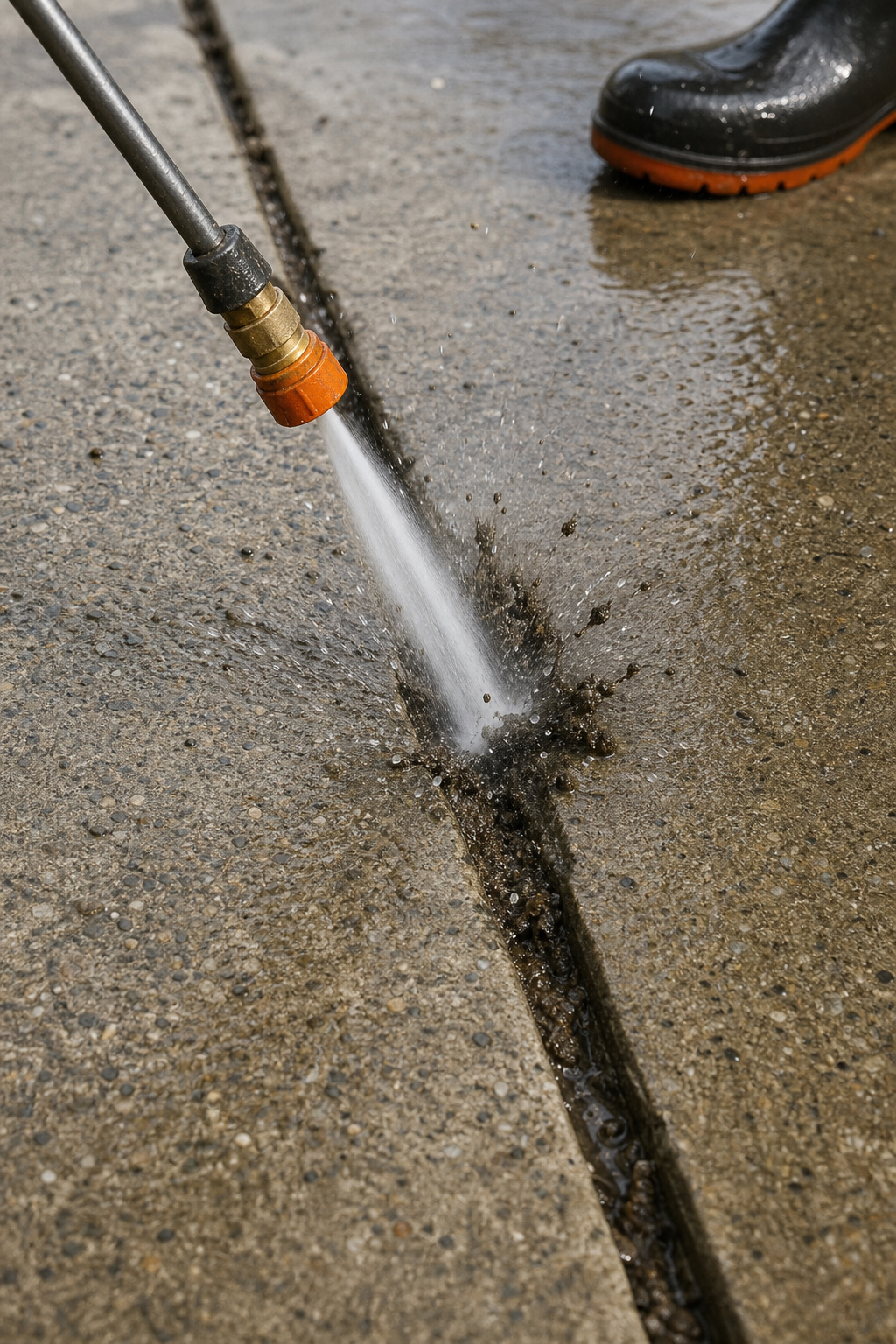
Start with a wire brush to loosen dirt. Then use a pressure washer on low setting (or a hose with a spray nozzle) to blast out the crack. Let it dry completely , at least a few hours in sun, longer in shade.
For deeper cracks, vacuum out dust with a wet/dry vacuum. You can also use a leaf blower on low. Sidewalks are exposed to the elements, so any leftover moisture can ruin the bond.
After cleaning, wipe the edges with a rag and a cleaning solvent or a concrete cleaning agent. This step is critical: skip it and the repair will fail.
Step 3: Choose the Right Repair Material
Not all crack fillers are the same. Here's a quick table to help you decide.
Crack Width | Best Material | Pros | Cons |
Hairline (< 1/8 inch) | Flexible crack filler (tube) | Easy, flexible, fast drying | Not for structural loads |
Narrow (1/8 – 1/4 inch) | Vinyl patching compound | Bonds well, paintable | Requires careful mixing |
Wide (1/4 – 1 inch) | Cementitious patching mortar | Strong, durable | Hardens fast, needs quick work |
Very wide (> 1 inch) or area larger than a few square feet | Concrete resurfacer | Self-leveling, covers large patches | Needs a bonding primer, multiple coats |
For most DIY sidewalk cracks, a vinyl patching compound from a home center works well. It's about $15-$30 per bag. If you want flexibility, a flexible sealant is top-tier but costs more.
Pro Tip:For deep cracks, use a backer rod (or a similar foam backer cut to size) before filling. This saves material and prevents the filler from sinking.
Step 4: Apply the Filler or Patch
Now it's time to fill. Work in small sections so the material doesn't skin over before you finish.
If using a squeeze-tube crack filler, cut the tip at a 45-degree angle, squeeze a bead along the crack, and press it in with a putty knife. Overfill slightly , you'll smooth it later.
For patching compound, mix according to the bag. Aim for a stiff but spreadable consistency. Trowel it into the crack, press firmly to expel air, and level it with the surrounding concrete. Use a straightedge tool or a board to screed across the area.
If the crack is deep, pack in layers. Let each layer set for 10-15 minutes before adding the next. This prevents shrinkage cracks.
Step 5: Finish and Texture the Repair
You want the patch to blend with the existing sidewalk. Smooth it with a trowel or float, then add texture to match.
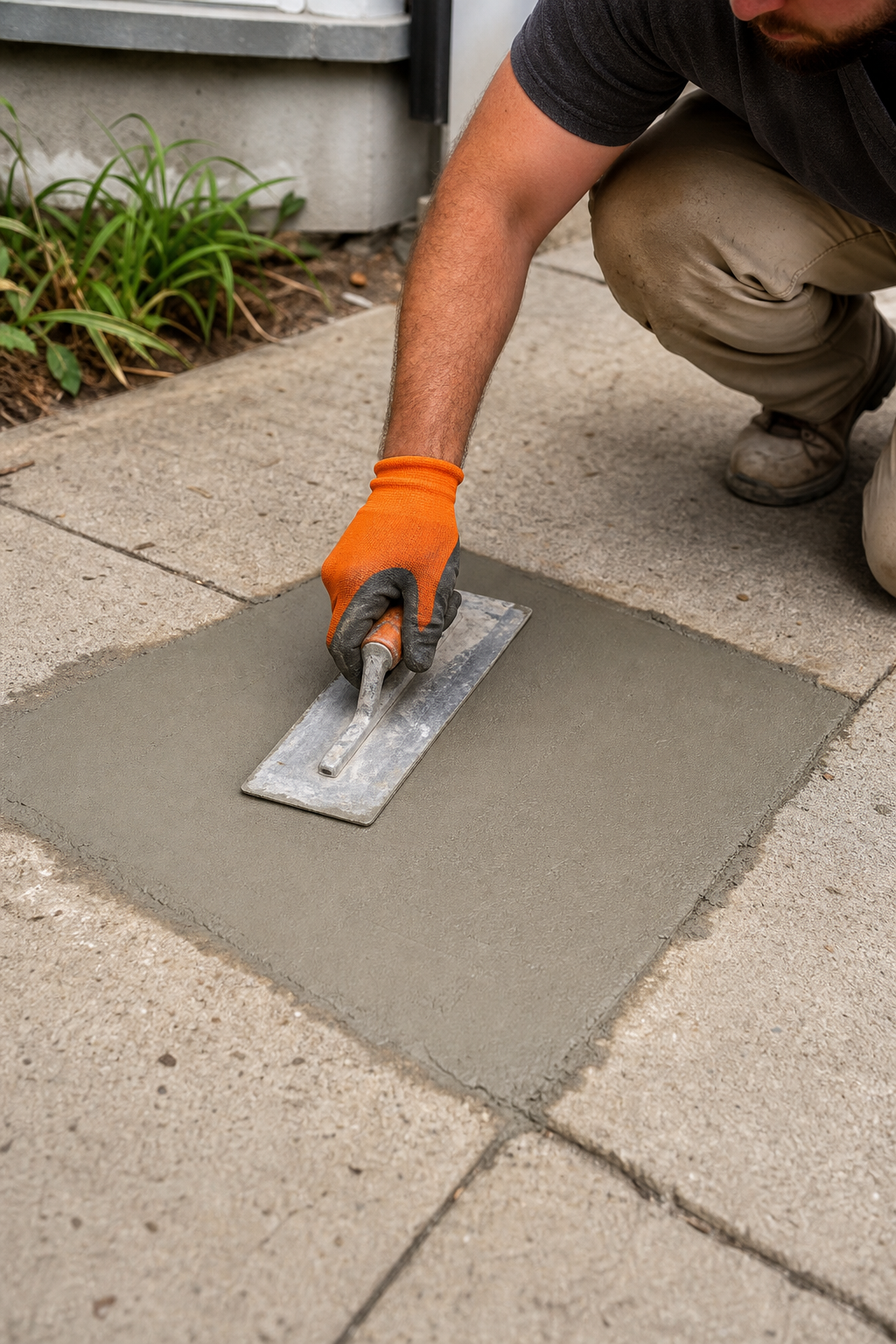
If the original sidewalk has a broom finish, drag a damp broom or brush across the fresh surface in the same direction. For smooth concrete, use a magnesium float and let it set to a slight sheen.
Feather the edges so there's no raised lip. A blending tool can help feather the edges. Let it set until firm (20-30 minutes) then check for any low spots. Fill them immediately.
For a smooth look, you can also use a concrete resurfacer over the entire slab after patching, but that's more involved.
Key Takeaway:Texture matching is what makes the repair disappear.
Step 6: Cure and Maintain
Curing is the most overlooked step. Concrete needs moisture to gain strength. Keep the repair damp for at least three days if possible.
Cover with a protective covering or a moist curing cloth . Mist it lightly every morning and evening. Avoid foot traffic for 24 hours and heavier loads for three days.
After curing, seal the repair with a protective sealant to protect against water and de-icing salts. Never use ice-melting salt on concrete , it accelerates cracking. Use sand or a concrete-safe de-icer instead.
For large or multiple cracks, consider professional help. LGFMH Construction's repair services cover everything from crack filling to full slab replacement, with proper tools and materials.
20%of DIY repair failures are due to poor surface preparation
Frequently Asked Questions
What's the best product to fix a cracked concrete sidewalk?
The best product depends on crack width. For hairline cracks, use a flexible crack filler. For wider cracks, use a vinyl patching compound or a cement-based patching compound. For large areas, use a concrete resurfacer.
Can I just pour new concrete over the cracked sidewalk?
No. Poured new concrete over cracked concrete will crack again because the old slab moves underneath. You must repair the crack first, or remove and replace the damaged section.
How long does it take to fix a sidewalk crack?
Cleaning and filling takes about 30 minutes per crack. Drying and curing take 24-72 hours. Total time including curing is about three days.
Do I need to use a bonding agent?
A bonding agent helps with thin patches and resurfacer, but many modern patching compounds include bonding chemicals. Read the label. For deep cracks, a bonding agent isn't necessary.
How do I prevent future cracks?
Proper drainage, soil compaction, and control joints help. Avoid large tree roots near the sidewalk. Apply a protective coating every few years to keep water out.
Should I hire a professional for sidewalk crack repair?
If the crack is structural, the slab is uneven, or you have multiple cracks over a large area, hire a pro. LGFMH Construction specializes in concrete repair and can do the job faster with better results.
Conclusion
Fixing a cracked concrete sidewalk is a DIY-friendly job if the damage is small and the prep is done right. Clean well, use the right material, and cure fully. For bigger jobs or peace of mind, LGFMH Construction can handle it. And if you're financing a larger renovation, some lenders offer options to help with costs.