Garage Door Opener Cost: Belt vs Chain
- William McKracherne
- 1 day ago
- 5 min read

Wondering why one garage door opener costs much more than another? The short answer is that belt drives usually cost more, while chain drives often save money up front. In the small set of products reviewed, one belt model had listed pricing, while two chain models started below $200. Use these steps to compare the full cost before you buy.
Table of Contents
Step 1: Check Your Garage Layout
Start by checking how your garage connects to the home. Noise and ceiling space can change the best choice more than the drive type alone.
Stand near the room above or beside the garage while someone opens the door. Chain drives use a metal chain and can send more sound and vibration through the frame. Belt drives use a reinforced belt and tend to run with less vibration. That makes a belt worth a closer look for an attached garage.
If the garage is detached, noise may matter less. A chain drive can then make more sense when your main goal is a lower purchase cost.
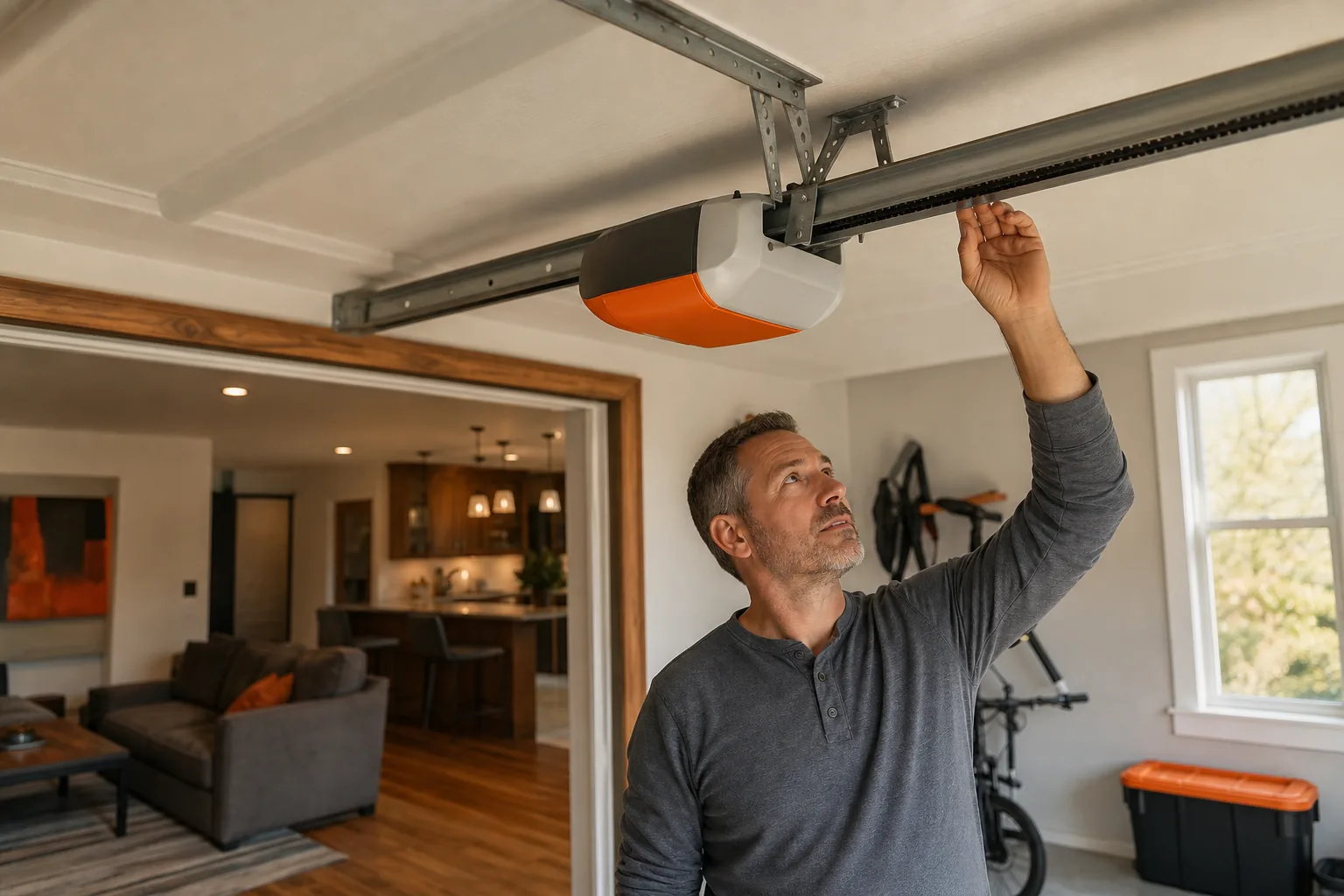
By now you should know whether sound, ceiling space, or price has the most weight in your decision.
Step 2: Set Your Total Budget
Compare the full garage door opener cost, not only the motor unit.
The disclosed belt price for LiftMaster 87504-267 was higher than the chain-drive prices.
That sample is too small to set a market-wide price range. Still, it shows the pattern many buyers see: chain drives often have the lower entry cost, while belt drives can carry a clear premium.
Add possible expenses for installation, ceiling braces, wiring, remotes, an outside keypad, or battery backup. Ask for one quote that lists labor and each accessory. LGFMH Construction can inspect the setup and explain which parts are needed before replacement.
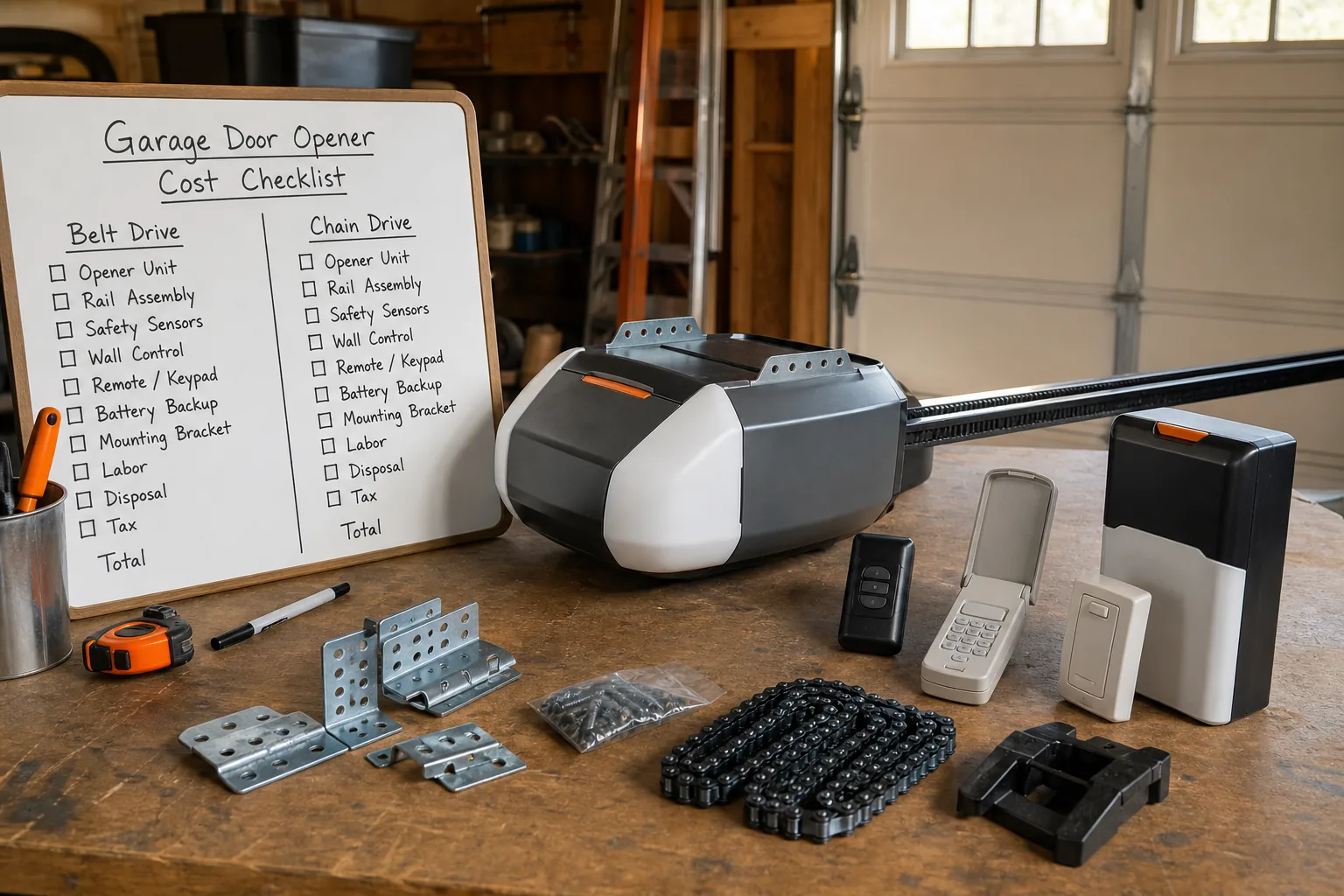
Your budget should now include the unit plus the work needed to mount and set it up.
Step 3: Compare Noise and Vibration
For garage door opener belt drive vs chain drive cost, judge the noise premium in your own home.
Available product data does not give a clean decibel test. Three products use noise words instead: “superquiet” for Chamberlain B2405, “surprisingly quiet” for Genie 550, and “quieter” for Genie SilentMax. That means both drive types make quiet claims, so the data does not prove a clear winner.
Chamberlain says its belt-drive units are built to reduce noise near living spaces. Some models also include Wi-Fi, a camera, or battery backup, but those features can raise the price.
Play a sound comparison at a similar distance from your bedroom or living room. Listen for vibration through walls, not only motor volume. A quiet belt drive cannot fix noisy rollers, hinges, or an unbalanced door.
Step 4: Match the Opener to the Door
Match motor strength to the door size and weight before choosing a cheaper chain model.
Check the door’s width, material, balance, and spring condition. A heavy or oversized door may need more torque.
Lift the door by hand only if it is safe to do so. If it feels unusually heavy or fails to stay in place, fix the door system first. The opener should guide a balanced door, not carry a fault in the springs or tracks.
Ask the installer to confirm the required motor rating in writing. LGFMH Construction can help review the door condition before you commit to a replacement.
Step 5: Check Space and Installation
Measure the ceiling, rail path, and headroom before ordering an opener.
Standard ceiling-mounted units need room above the door for the rail and motor. Low headroom or ceiling storage may call for a wall-mounted jackshaft design. These units free overhead space, but they need a compatible torsion spring system.
Do not assume a new opener will fit the old brackets. Installation may need new bracing, wiring, sensor alignment, or removal of the old unit. A professional swap often takes longer when the ceiling needs support or the layout changes.
By this step, you should know if the low purchase price still works after installation needs are included.
Step 6: Compare Smart Features and Accessories
Smart features can explain part of the price gap, but buy only what you will use.
Chamberlain B2405 includes built-in myQ technology, two remotes, a wireless keypad, and a wall control. Chamberlain B6753T adds app control, a built-in Wi-Fi camera, and bright interior lighting. LiftMaster 87504-267 lists integrated battery backup.
These extras change the total value. Battery backup helps during a power cut. A keypad helps family members enter without a remote. App control can help you check the door when you are away.
For compatibility questions, LGFMH Construction also provides a Smart Garage Door Opener Compatibility Guide .
Step 7: Review Maintenance and Durability
Compare upkeep needs along with the garage door opener cost.
Chain drives are known for strength and long service under heavy use, but the chain needs care and can become noisy. Belt drives need less chain-style upkeep and usually run more smoothly. A reinforced belt is not automatically weak, yet it can still wear if the door binds or the rail is poorly set.
Inspect the door balance, rollers, hinges, track, and safety sensors during routine checks.
One belt model in the sample, Genie SilentMax, lists a limited lifetime warranty on its motor and gearbox. That is useful, but one warranty cannot prove a broad belt-drive trend.
Step 8: Check Warranty and Get Quotes
Read the warranty before you compare two final models.
Separate coverage for the motor, belt or chain, parts, labor, and accessories. Ask who handles a claim and whether labor is included.
Request quotes from a qualified installer that state the model, drive type, mounting work, sensor test, programming, disposal, and accessories. A low unit price can lose its value if the quote leaves out bracing or setup.
LGFMH Construction handles interior and exterior repairs and replacements, so it can help you review related garage work before the opener is installed. Get the inspection and quote in writing.
FAQ
Is a belt drive garage door opener worth the extra cost?
A belt drive can be worth the extra cost when your garage is attached to living space or vibration bothers you. The reviewed price data shows a higher listed price for one belt model, but the noise evidence is limited and qualitative. Pay more when quiet operation, smart features, or battery backup solve a real problem in your home.
Which is cheaper, a belt or chain garage door opener?
Chain drive openers are usually cheaper at purchase based on the available sample. Installation, braces, wiring, accessories, and future repairs can change the final cost.
Are belt drive openers quieter than chain drives?
One belt model was called “quieter,” while two chain models were also described with positive noise terms. Your rollers, hinges, tracks, and door balance can affect sound as much as the opener.
Which drive is better for a heavy garage door?
A chain drive may suit a heavy door because chain systems are known for strength, but the door and motor rating must be checked first. Have an installer inspect the springs and balance before choosing a drive type for a heavy or oversized door.
Conclusion
Choose a chain drive when the garage is detached and your first concern is purchase price. Choose a belt drive when nearby rooms make vibration worth paying to reduce. Before ordering, ask LGFMH Construction for a written inspection and quote that covers the opener, mounting work, accessories, warranty, and setup.


Comments