How Much Does Interior Painting Cost: A Complete Guide
- William McKracherne
- Dec 2, 2025
- 19 min read

Ever walked into a room and felt that the paint just looked off, but you weren't sure if it was the color, the finish, or maybe the whole job was done on a shoestring budget? That moment of doubt is exactly why most homeowners start wondering,how much does interior painting costbefore they even pick up a brush.
Here's the thing: the price tag can swing wildly. A small bedroom painted by a DIY enthusiast might be under $200, while a full‑home overhaul by a professional crew can climb into the $5,000‑$8,000 range. It all depends on three core factors – square footage, surface prep, and the quality of paint you choose.
Take Sarah, for example. She needed her living room and two bedrooms refreshed. The rooms added up to roughly 600 sq ft. She opted for a premium low‑VOC paint that costs about $35 per gallon and hired a local crew who quoted $1.50 per sq ft for labor, including minor drywall repairs. Her total landed at about $2,200 – a figure that felt high until she realized the crew also fixed a few nail holes and sanded a popcorn ceiling, tasks that would have cost extra if she’d done them herself.
Contrast that with Mike, who lives in a condo and tackled the job solo. He bought a mid‑range paint at $25 per gallon, used a roller and brush he already owned, and spent a weekend prepping the walls. His material cost was roughly $150 and he saved the labor expense entirely, ending up under $300.
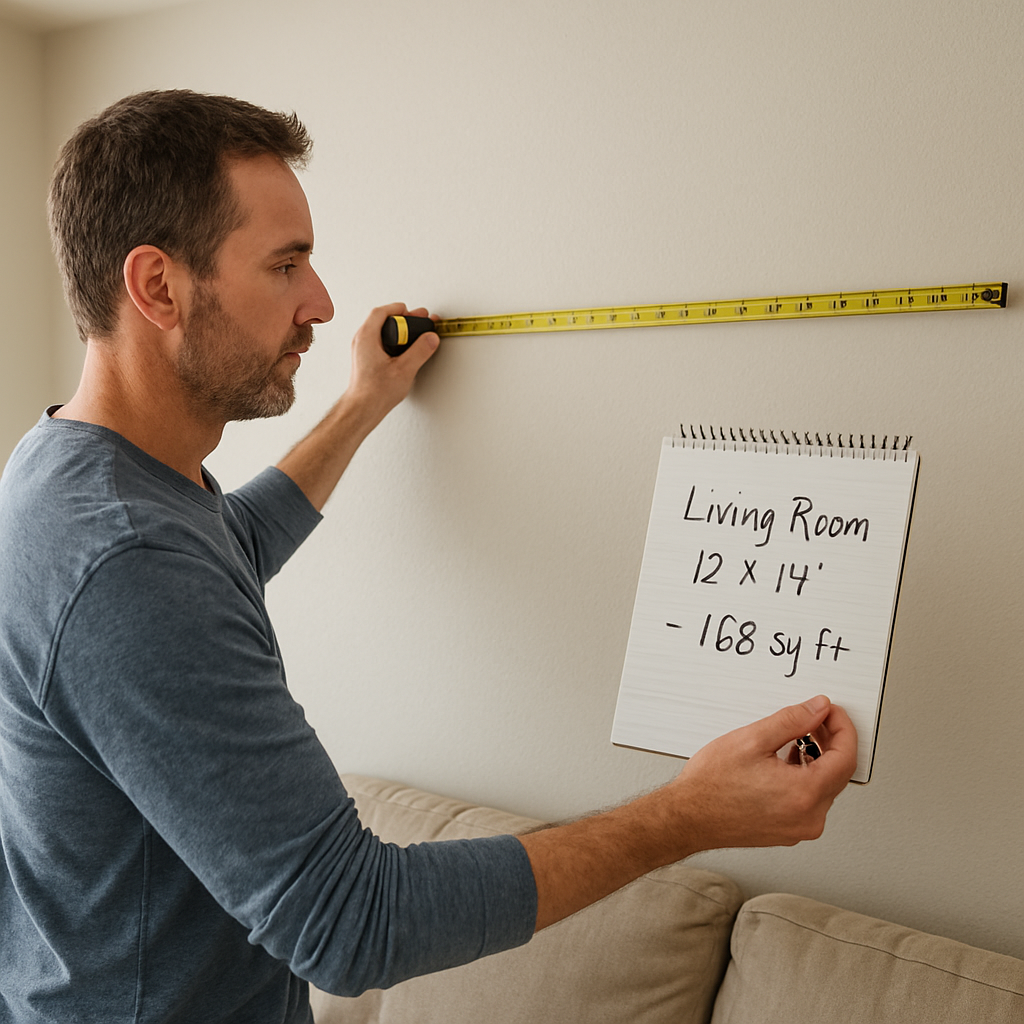
So, how can you predict your own budget? Start with a quick measurement: multiply the room's length by its width to get square footage, then add a 10 % buffer for closets and hallways. Multiply that number by $1.00‑$2.00 for basic labor rates, and add $30‑$45 per gallon of paint (usually one gallon covers about 350 sq ft). Don't forget to factor in prep work – filling holes, sanding, and priming can add $0.25‑$0.50 per sq ft.
If you're unsure whether your walls need extensive repairs, consider a professional assessment. Repairs | Lgfmh Construction offers free consultations that can pinpoint hidden issues before you commit to a paint budget.
And while you're thinking about freshening up the walls, a well‑chosen window treatment can tie the whole look together. For inspiration, check out Choosing Cafe Curtains for Kitchen Windows – a quick read that pairs nicely with any painting project.
Bottom line: knowing your square footage, picking the right paint, and budgeting for prep work will give you a realistic estimate and keep surprise costs at bay. Ready to map out your numbers? Grab a tape measure, pull out a calculator, and start adding up those figures – you'll be surprised how clear the picture becomes.
TL;DR
Curious about how much does interior painting cost? Start by measuring square footage, add a 10 % buffer, then multiply by $1‑$2 per sq ft labor and $30‑$45 per gallon paint.
Don’t forget prep work—filling holes, sanding, priming—at roughly $0.25‑$0.50 per sq ft, and you’ll have a clear, surprise‑free estimate today.
Step 1: Assess Room Size and Surface Conditions
Before you even think about how much does interior painting cost, you need to know exactly what you're looking at. Imagine you walk into a bedroom and immediately wonder whether the walls are 8 feet tall or 12 feet tall – that extra height can add a noticeable bump to the bill.
So, where do you start? Grab a tape measure, a notepad, and a little curiosity. The goal is to turn a vague feeling of “this room looks big” into solid numbers you can plug into a calculator.
Measure the floor plan
Measure each wall’s length, then multiply by the ceiling height. For a typical 10‑ft ceiling, a 12‑ft by 15‑ft room yields 12×10 + 15×10 = 270 sq ft of wall space. Add the opposite walls (another 270 sq ft) and you’re at 540 sq ft of paintable surface.
Don’t forget closets, hallways, or any nook that isn’t a perfect rectangle. Sketch a quick diagram, label each segment, and total the square footage. A 10 % buffer is a safety net for those little corners you missed – just multiply your total by 1.10.
Check ceiling height and access
Higher ceilings aren’t just an aesthetic choice; they’re a cost factor. Improovy notes that walls taller than 10 ft can increase the price per square foot by $0.55‑$1.10, and anything 14 ft or more can add another $0.74‑$1.49 per square foot.according to Improovy's interior painting cost guide
Ask yourself: can you reach the top with a standard roller, or will you need an extension pole or a ladder? If a ladder is required, factor in the extra labor time – a professional crew will charge a premium for that extra safety work.
Inspect surface condition
Walk the room with a flashlight and look for three things: holes, cracks, and texture. A smooth drywall that only needs a light sanding is a quick job. A popcorn ceiling or heavily textured plaster can double prep time.
Make a quick checklist:
Any nail holes or small dents? (Patch and sand.)
Cracked drywall or water‑stained spots? (Replace or skim coat.)
Glossy or oily surfaces? (Degrease and prime.)
Existing paint peeling? (Scrape and prime.)
Each item on that list translates directly into dollars. A typical prep budget ranges from $0.25‑$0.50 per square foot, but heavily damaged walls can push that higher.
Create a realistic cost estimate
Now that you have square footage and a sense of the prep load, plug the numbers into a simple formula:
Base paint labor: $1.00‑$2.00 per sq ft.
Prep work: $0.25‑$0.50 per sq ft (adjust up if you noted major repairs).
Ceiling height surcharge: add $0.55‑$1.10 per sq ft for every foot above 10 ft.
For our earlier 540 sq ft bedroom with a 12‑ft ceiling and minor patching, the math looks like this: (540 × $1.50) = $810 labor, plus (540 × $0.30) = $162 prep, plus (540 × $0.75) = $405 height surcharge. Total rough estimate: $1,377 before paint and materials.
Seeing the numbers laid out like this takes the mystery out of “how much does interior painting cost” and gives you a concrete starting point for quotes.
After watching the video, take a moment to double‑check your measurements. It’s easy to misread a wall that’s slightly angled or a hallway that tapers.
When you’re ready, pull together a short brief for any painter you contact. Include the total square footage, ceiling height, and a bullet‑point list of the prep items you identified. That way the contractor can give you a quote that’s transparent and comparable to the estimate you just built.
Finally, remember that every room is a little different. A kitchen with cabinets, a bathroom with tile, or a stairwell with multiple landings each adds its own quirks. Treat each space as its own mini‑project, run the same assessment steps, and you’ll end up with a clear, confidence‑boosting picture of the total cost.
Step 2: Choose Paint Quality and Finish
Now that you’ve got your square footage and a rough labor estimate, the next big decision is what actually goes on the wall. That decision – the paint you buy and the finish you pick – can swing your total cost up or down by a few hundred dollars, and it also determines how long the job will last. Let’s walk through how to choose wisely without blowing your budget.
First, think about paint quality the way you’d think about a good pair of shoes. A cheap, thin‑film paint might feel fine at first, but it wears out faster, you’ll probably need a second coat, and you might end up touching up sooner. Premium low‑VOC or “professional‑grade” paints have better pigment coverage, resist yellowing, and often include built‑in primers that save you both time and money. So the upfront price tag can actually protect you from hidden costs later.
How much does interior painting cost when you choose a mid‑range paint versus a top‑tier brand? A typical mid‑range paint runs about $25–$30 per gallon, while premium lines sit around $35–$45. If one gallon covers roughly 350 sq ft, that extra $10–$15 per gallon translates to roughly $30–$45 more for a 600‑sq‑ft room – not a huge jump if the finish looks better and lasts longer.
Understanding Finish Options
The most common finishes are flat (or matte), eggshell, satin, semi‑gloss, and high‑gloss, each with its own pros, cons, and price impact. Flat paint hides wall imperfections but is harder to clean, so it’s great for ceilings or low‑traffic bedrooms. Eggshell and satin strike a balance: they’re a little more resilient to scrubbing and work well in living rooms, hallways, and kids’ rooms. Semi‑gloss and high‑gloss are super durable and reflect light, making them perfect for trim, doors, kitchens, and bathrooms where moisture and mess are common.
Higher‑sheen paints usually contain more resin, bumping the per‑gallon price by $2–$5, but they may need fewer coats, saving labor. Flat paint might need a second coat to achieve even coverage, adding a little extra labor time. The key is matching the finish to the room’s use so you’re not over‑paying for durability you’ll never need.
Quick Decision Checklist
Identify the room’s traffic level – high traffic (hallways, kids’ rooms) → eggshell or satin; very high (kitchen, bathroom) → semi‑gloss.
Consider moisture exposure – bathrooms and laundry rooms benefit from a moisture‑resistant semi‑gloss or satin.
Assess wall condition – if you have imperfections, flat or matte hides them best; otherwise, go with a higher sheen for easier cleaning.
Set your budget – if you’re tight, choose a reputable mid‑range paint and a satin finish; you’ll still get good durability without the premium price.
Ask your painter – many pros have preferred brands that balance cost and performance; they can often get trade discounts that shave a few dollars per gallon.
Remember, paint quality and finish are the two levers that directly influence the final number you see when you ask, “how much does interior painting cost?” By picking a paint that offers good coverage and the appropriate sheen for each space, you keep the per‑gallon cost reasonable and avoid hidden labor fees later.
So, grab a few sample swatches, test them on the wall, and make a decision that feels right for your home and your wallet.
Step 3: Estimate Labor Costs and Compare Rates
Okay, you’ve measured the walls, picked a paint, and now you’re staring at the dreaded question:how much does interior painting costwhen you add labor into the mix? Let’s break it down so the numbers feel less like a mystery and more like a conversation over coffee.
1. Know the pricing models
Most painters work off one of three structures: a flat per‑square‑foot rate, an hourly fee, or a daily rate. The per‑square‑foot model is the most common for residential jobs – you’ll often see quotes of $1 to $3 per sq ft for labor alone.PaintEZ explains that labor typically accounts for 70‑85% of the total cost. If you’re budgeting a 12 × 12 room (about 144 sq ft of wall space), that translates to roughly $144‑$432 in labor before any prep work.
Hourly rates usually sit between $20 and $50, depending on experience and region. A seasoned pro might finish a standard bedroom in 4‑6 hours, while a newer painter could need 8‑10 hours, nudging the total up.
2. Factor in prep work
Prep is the silent cost driver. Sanding, patching holes, and priming can add $0.25‑$0.50 per sq ft. For our 144 sq ft example, that’s an extra $36‑$72. If you have popcorn ceilings or a lot of nail holes, expect the higher end of that range.
Pro tip: ask the painter for a line‑item breakdown. If the quote lumps “prep” into a vague “labor” charge, you might be paying more than necessary.
3. Daily rates – when they make sense
Some contractors quote a day rate instead of per‑square‑foot. In many markets, a day’s work costs $330‑$605.Improovy notes that daily rates often exclude paint and materials. If you’re tackling a whole‑house interior (say 1,500 sq ft), a day rate can simplify budgeting, but you’ll still need to add the material cost separately.
Remember, daily rates usually assume a full 8‑hour workday. If a painter needs a ladder for high ceilings, they might tack on an extra hour or two – and that extra time becomes extra dollars.
4. Compare quotes like a shopper
Here’s a quick checklist to keep in your back pocket when you’re looking at three different estimates:
Is labor quoted per sq ft, per hour, or per day?
Does the estimate break out prep work?
Are paint and primer included, or will you be billed later?
Any surcharges for high ceilings, ladders, or tricky trim?
Write down the numbers side by side – you’ll see which painter is really offering the best value.
5. Build your own quick calculator
Grab a piece of paper (or your phone) and plug in these simple formulas:
Labor = square footage × $1‑$3 (choose the rate that matches the quote you got).
Prep = square footage × $0.25‑$0.50.
Daily surcharge (if applicable) = number of days × daily rate.
Total labor cost = Labor + Prep + Daily surcharge.
Then add your paint cost (usually $25‑$45 per gallon, about one gallon per 350 sq ft). Suddenly you’ve got a concrete number instead of a vague “it’ll be pricey.”
6. Real‑world example
Imagine you’re painting a 600 sq ft living area with 9‑ft ceilings. Using the mid‑range $2 per sq ft labor, you get $1,200. Prep work at $0.35 per sq ft adds $210. Paint (two coats, mid‑range $30 per gallon) costs roughly $60. Total labor‑related cost: $1,470. That’s the figure you’ll see when you ask, “how much does interior painting cost?” and it lines up with the $1,000‑$1,500 range many homeowners report.
Does that feel more manageable?
7. Quick decision table
Pricing Model | Typical Range | What’s Included? |
Per‑sq ft Labor | $1‑$3 per sq ft | Basic painting, often includes light prep |
Hourly | $20‑$50 per hour | Labor only; you’ll need separate prep & paint costs |
Daily Rate | $330‑$605 per day | Labor for a full day, usually excludes paint and major prep |
Take a moment to compare the three columns with your own project. Which model lines up with your timeline and budget?
Bottom line: once you know how labor is priced, you can ask the right questions, negotiate smarter, and finally answer “how much does interior painting cost?” without the guesswork.
Step 4: Add Prep Work and Additional Services
Now that you know your square footage and have picked a paint, it’s time to look at the stuff that often sneaks into the final bill – prep work and extra services. Think of it as the “hidden ingredients” that turn a simple paint job into a professional finish.
Why prep matters
Imagine you’re about to roll a fresh coat over a wall that still has nail holes, glossy kitchen grease, or old popcorn texture. If you skip the prep, you’ll see streaks, chips, and you’ll probably need a touch‑up sooner. That’s why most contractors charge a prep line item – it’s the foundation for a smooth, lasting result.
Typical prep costs run about $0.25‑$0.50 per square foot, but the exact price depends on what you actually have to fix. Let’s walk through the most common prep tasks and how they affect “how much does interior painting cost.”
Step‑by‑step prep checklist
1.Surface cleaning.Dust, cobwebs, and grease are the enemy of adhesion. A quick wash with mild soap and water, or a degreaser for kitchen walls, usually takes 5‑10 minutes per room. Most painters include this in the base prep fee.
2.Patch holes and cracks.Small nail holes are easy – just a dab of spackle, sand smooth, and you’re good. Larger cracks or water‑stained areas might need a joint compound and a second sanding. Each square foot of patching adds roughly $0.05‑$0.10 on top of the base prep rate.
3.Sanding.Rough surfaces or glossy finishes need to be sanded to give the new paint something to grip. Light sanding adds about $0.08 per sq ft; heavy sanding (like removing popcorn ceiling) can climb to $0.20‑$0.30 per sq ft.
4.Priming.If you’re covering a dark color, raw drywall, or a stained area, a primer coat saves you an extra paint coat later. Primer is often billed as a separate material cost – roughly $0.10‑$0.15 per sq ft.
5.Masking and protection.Floors, trim, and fixtures need to be taped and covered. This is usually bundled into the prep fee, but if you have delicate surfaces (like hardwood floors) you might see a small surcharge.
Additional services that can boost cost – and value
Now, let’s talk about the “extras” that homeowners sometimes add on, either because they want a flawless look or because the space demands it.
– Ceilings work. Painting a ceiling is often quoted separately. If you have a textured or popcorn ceiling, expect an extra $0.30‑$0.60 per sq ft for removal or smoothing.
– Trim and doors. Baseboards, crown molding, and interior doors usually get a semi‑gloss finish. Painting trim can add $0.15‑$0.25 per linear foot, depending on the detail.
– Wallpaper removal. Stripping old wallpaper is labor‑intensive. Most painters charge $0.50‑$1.00 per sq ft for removal and surface prep afterward.
– Color‑change surcharge. Going from a dark to a light hue often means two coats of primer plus two coats of paint. Some contractors add a flat $100‑$200 “color change” fee to cover the extra material and labor.
How to budget for prep and extras
Start with your base prep estimate: square footage × $0.35 (a safe middle ground). Then add line items for any of the above services you know you’ll need. Here’s a quick example:
– 600 sq ft living room, standard walls: 600 × $0.35 = $210 prep.
– 2 hours of sanding popcorn ceiling: 200 sq ft × $0.45 = $90.
– Trim (150 lf) at $0.20 = $30.
– Primer for dark walls: 600 × $0.12 = $72.
Total additional prep & services: about $402.
When you add that to your labor and paint costs, the “how much does interior painting cost” number becomes crystal clear.
Tips to keep prep costs in check
– Do a quick DIY clean‑up before the pros arrive. A few minutes of wiping down walls can shave $20‑$40 off the prep line.
– Spot‑patch obvious holes yourself. A small tub of spackle is cheap and can reduce the contractor’s patching labor.
– Ask for a detailed, itemized quote. Seeing each prep task broken out helps you negotiate or eliminate anything you can handle on your own.
– Combine services. If you need both trim painting and ceiling work, ask the crew if they can bundle the labor – many will give a modest discount.
Bottom line: prep work and extra services are the real levers that move the “how much does interior painting cost” needle. By understanding each line item, you can decide where to invest for durability and where you can save by rolling up your sleeves.
Step 5: Factor in Geographic Pricing Variations
So you’ve measured the walls, picked the paint, and scoped the prep. The next thing most people forget is where they actually live. A quote in downtown Seattle can look nothing like a quote in a small town outside Spokane, and that’s not magic—it’s geography.
Why location matters
Think about it like this: labor rates, material shipping costs, and even climate‑driven prep needs all shift from zip code to zip code. When you ask, “how much does interior painting cost,” the answer will be nudged up or down by the local market.
And it’s not just paint. A recent guide on carpet replacement points out that prices in Washington swing dramatically because of regional labor and material factors(see example). The same principle applies to interior painting.
Regional labor rates
In high‑density metro areas—think Seattle, Bellevue, or Portland—experienced painters often charge $2.00‑$3.00 per square foot for labor alone. That’s because the cost of living is higher, permits cost more, and crews tend to have higher insurance premiums.
Contrast that with a rural community in eastern Washington or Idaho, where you might see $1.20‑$1.80 per square foot. Fewer contractors compete, but they also have lower overhead, so the price drops.
But don’t assume cheaper always means worse. Many rural painters are seasoned veterans who’ll spend just as much time on prep as a city crew.
Material cost differences
Paint itself is a commodity, but the final price you pay can be influenced by shipping distance. A premium low‑VOC brand stocked in a Seattle warehouse may be $0.10‑$0.20 per gallon cheaper than the same brand shipped to a remote mountain town.
And if you need specialty primers for moisture‑prone basements, those often come in larger bulk containers that are cheaper in urban distribution centers. In the suburbs, you might end up buying a smaller can at a higher per‑gallon price.
Climate‑driven prep costs
Living in a damp climate like the Pacific Northwest means you’ll probably need extra moisture‑resistant primer, especially in basements or bathrooms. That extra coat can add $0.05‑$0.10 per square foot.
In drier inland areas, you might skip that step entirely, saving a few hundred dollars on a 1,000‑sq‑ft project. On the flip side, desert‑heat zones often demand heat‑reflective paints to keep interiors cooler, which can cost a bit more.
So, before you hand over a check, ask yourself: “Do I need a moisture barrier? Do I need a heat‑reflective finish?” Those answers will shape the final number.
Actionable checklist for geographic adjustments
1.Research local labor averages.Call three painters in your zip code and note their per‑sq‑ft labor rates.
2.Ask about paint sourcing.If a contractor is buying paint locally, they may pass on a discount.
3.Factor climate prep.Add $0.05‑$0.10 per sq ft if you live in a high‑humidity area.
4.Include travel or mobilization fees.Some crews charge a flat $50‑$150 for jobs outside their core service area.
5.Get a line‑item quote.See each geographic surcharge broken out so you can negotiate or eliminate it.
Here’s a quick example: A 600‑sq‑ft living room in Seattle with 9‑ft ceilings, premium paint, and moisture‑resistant primer.
• Labor: 600 sq ft × $2.50 = $1,500
• Base prep: 600 sq ft × $0.35 = $210
• Moisture‑resistant primer surcharge: 600 sq ft × $0.08 = $48
• Paint (mid‑range $30/gal, 2 gals): $60
• Travel fee (urban, $0): $0
Total: ≈ $1,818
Now flip the same room to a small town 80 miles east, where labor is $1.60 per sq ft and no moisture surcharge is needed.
• Labor: 600 sq ft × $1.60 = $960
• Base prep: $210 (same)
• Paint: $60
• Travel fee: $75
Total: ≈ $1,305
That’s a $513 difference driven purely by geography. Knowing where those dollars are coming from lets you decide whether to pay a little extra for a local crew’s convenience or to shop around for a regional contractor who can travel.
Bottom line: “How much does interior painting cost?” isn’t a single number—it’s a range that widens or shrinks based on where you hang your hat. Use the checklist, ask the right questions, and you’ll end up with a budget that feels realistic instead of a surprise at the end of the job.
Step 6: Create a Detailed Budget and Savings Tips
Alright, you’ve measured, you’ve picked paint, you’ve scoped prep – now it’s time to sit down with a notebook (or a spreadsheet) and turn those numbers into a realistic budget. Think of it as building a roadmap that keeps surprise costs from popping up like unwanted guests.
Gather Your Numbers
First, list every line item you’ve already uncovered:
Square footage of walls and ceiling
Labor rate per square foot (or hourly, if that’s how your contractor quotes)
Prep work multiplier (usually $0.25‑$0.50 per sq ft)
Paint gallons needed and per‑gallon price
Any geographic surcharges – travel fee, moisture‑resistant primer, high‑ceiling extra
Write these down exactly as they appear on your quotes. When you see “$1.60 per sq ft labor” it feels less abstract than “some amount for labor.”
Does this feel overwhelming? Take a breath – we’ll break it apart.
Break Down the Costs
Use a simple formula for each category:
Labor = total sq ft × labor rate
Prep = total sq ft × prep rate
Paint = gallons × price per gallon
Extras = any flat fees or per‑sq ft surcharges
Plug the numbers in. For a 600 sq ft living room with $1.80 labor, $0.35 prep, $30 paint per gallon (2 gallons), and a $75 travel fee, you’d get:
Labor: 600 × $1.80 = $1,080
Prep: 600 × $0.35 = $210
Paint: 2 × $30 = $60
Travel: $75
Total so far: $1,425. That’s your baseline before any savings tricks.
Find Savings Levers
Now ask yourself where you can shave a few dollars without sacrificing quality.
DIY prep.Spend a Saturday wiping walls, patching small holes, and you could cut $30‑$50 from the prep line.
Buy paint in bulk.Many home‑center clubs let you pick up a 5‑gallon bucket for the price of a 1‑gallon, saving $5‑$10 per gallon.
Negotiate the travel fee.If the crew is within 30 miles, ask if they can waive or reduce it – it’s often a flat markup.
Ask about a “color‑change” discount.Some painters bundle extra coats for a lower per‑gallon rate.
Even a modest $100 reduction brings your total down to $1,325, which feels more manageable.
Build a Simple Spreadsheet
Open a new sheet and create columns for “Item,” “Qty,” “Unit Cost,” and “Total.” Fill each row with the line items above. Then add a “Savings” column where you note any DIY or discount you’ve applied. The sum at the bottom is your final projected cost.
Pro tip: color‑code the “Savings” rows in green – it makes the money you’re keeping visible and motivates you to keep hunting for more.
Review & Adjust
Once you have a total, compare it to your comfort zone. If it’s still too high, look back at your paint choice – a mid‑range brand ($25‑$30 per gallon) can often replace a premium ($35‑$45) with only a slight difference in finish, especially if you prime well.
Also, consider timing. Scheduling work in the off‑season (fall or winter) can shave 5‑10 % off labor rates because crews have slower schedules.
Finally, remember that painting costs can be added to your home’s cost basis when you sell, which may lower your capital gains tax later. TurboTax community members explain how to do that . It’s a small financial win that often goes unnoticed.
Take a moment now: pull out that notebook, jot the numbers, apply one or two savings ideas, and you’ll have a clear, confidence‑boosting budget that answers “how much does interior painting cost” for your specific project.

Conclusion
We've walked through the whole process, so you can finally answer the question that started it all: how much does interior painting cost? If you’re still wondering whether the numbers you’ve crunched feel right, take a breath – you’ve got a solid framework now.
Remember the four pillars: measure every wall and ceiling, pick a paint quality and finish that matches the room’s traffic, factor in prep work and any extra services, and adjust for where you live. Plug those numbers into the simple formulas we shared, and you’ll see a realistic range instead of a vague guess.
What does that mean for you? It means you can sit down with a contractor, compare line‑item quotes, and spot any hidden fees before they become a surprise. It also means you can decide where to roll up your sleeves – a quick DIY clean‑up or patch can shave a few hundred dollars off the final bill.
So, what’s the next step? Grab that notebook or spreadsheet, fill in your own checklist, and use it as a conversation starter with a local painting pro. If you’d like a detailed, itemized estimate from a team that knows the ins and outs of repairs and replacements, give LGFMH Construction a call. We’ll help you lock in a budget that feels confident and fair.
FAQ
How much does interior painting cost for a typical bedroom?
Most homeowners see a range between $1,200 and $1,800 for a standard 12 × 12 room with 9‑ft ceilings. That figure includes labor, basic prep (patching small holes, light sanding) and two coats of mid‑range paint. If your walls need extensive repair or you choose a premium finish, expect the total to creep toward the high end of that range.
What factors make interior painting cost jump the most?
Height is a big driver – every foot above 10 ft can add $0.55‑$1.10 per square foot in labor. Heavy prep work, like removing popcorn ceiling or fixing water‑stained drywall, also bumps the price because each extra step is billed separately. Finally, geographic location matters; contractors in metro areas often charge $2‑$3 per sq ft, while rural rates can be $1.20‑$1.80.
Do I have to pay for paint, or is it included in the labor quote?
Most reputable painters break paint out as a separate line item so you know exactly how much material you’re buying. A gallon of mid‑range paint runs about $25‑$30 and covers roughly 350 sq ft, so a 600‑sq ft room typically needs two gallons. If a quote rolls paint into labor, ask for an itemized version to avoid hidden surprises.
How can I lower the cost without sacrificing quality?
Start by handling the easy prep yourself – clean walls, patch nail holes, and tape trim. Buying paint in bulk or catching a store sale can shave $5‑$10 per gallon. Also, schedule the job in the off‑season; many crews discount labor by 5‑10 % when business slows down.
Is a daily rate ever cheaper than a per‑square‑foot price?
It can be, especially for larger homes. A day crew typically charges $330‑$605 for an eight‑hour shift, which often works out lower than $2‑$3 per sq ft when you’re covering 1,500 sq ft or more. Just make sure the daily rate includes all prep, paint, and cleanup, otherwise you’ll end up adding hidden fees later.
What should I ask a painter before signing a contract?
Request a line‑item estimate that separates labor, prep, paint, and any geographic surcharges. Ask how they handle high ceilings, whether they include primer for dark colors, and if there’s a travel fee for jobs outside their core area. Getting clear answers up front helps you compare quotes like apples‑to‑apples and avoids surprise charges on moving day.


Comments