How to Choose the Best Garage Door Weather Seal for Cold Climates
- William McKracherne
- Jun 17
- 6 min read

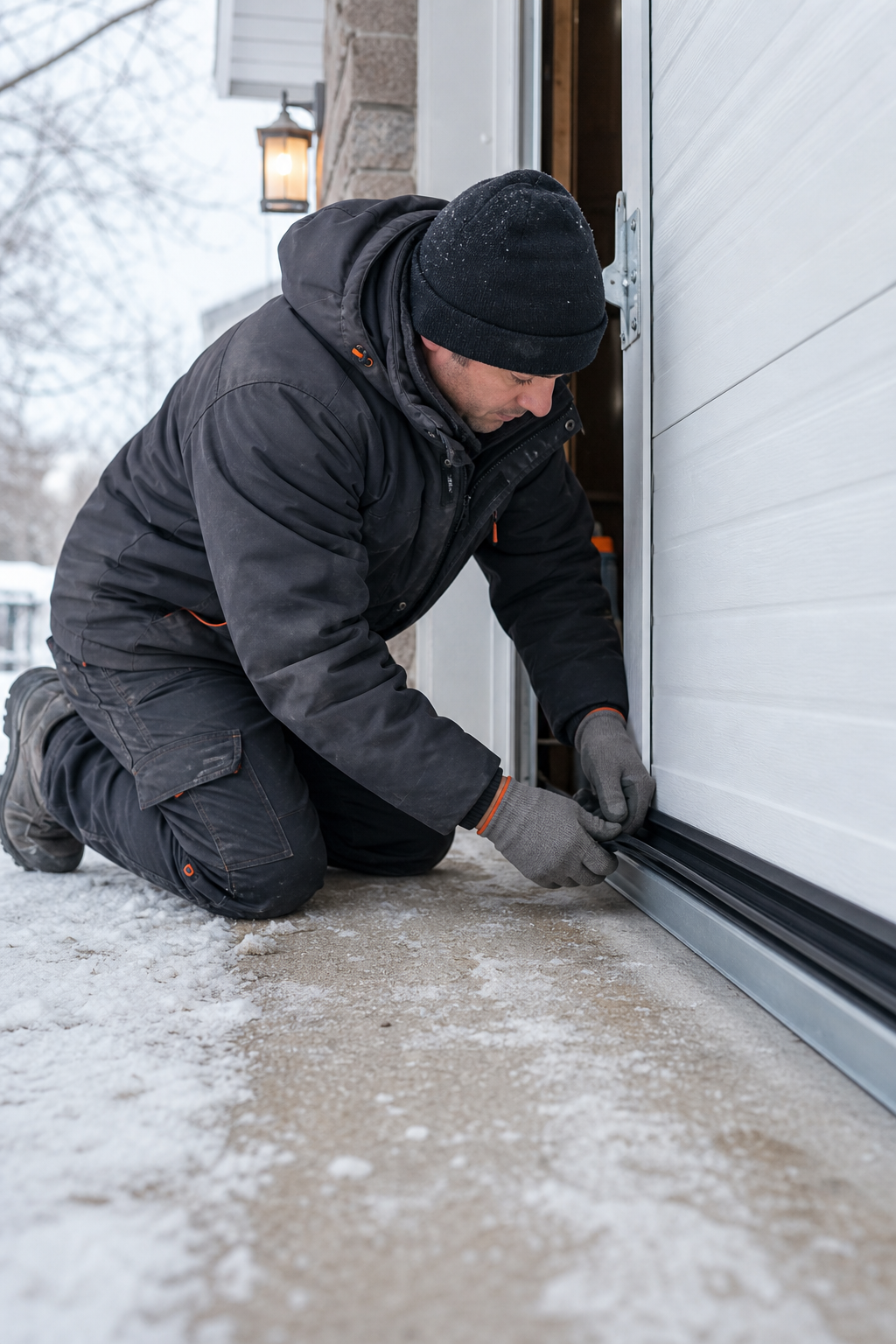
Cold climates demand a garage door seal that won't crack, shrink, or let freezing air in. But here's the thing: most of the best-selling seals are simple door sweeps under $25 with no temperature rating at all. So how do you pick the right one? Here's a step-by-step guide to choosing and installing the best garage door weather seal for cold climates, and knowing when to call a pro.
Step 1: Understand Cold Climate Requirements
Before you buy anything, know what your garage door faces. The research data from mid-2026 shows that 14 popular seals all had zero temperature ratings or R-values listed. That means you can't rely on marketing, you have to look at the material and design.
For cold climates, you need a seal that stays flexible below zero. Look for EPDM rubber or other cold-weather materials, they handle temperatures down to -40°F without cracking. Vinyl gets stiff and brittle in extreme cold. Also, check the seal type: a double-T rubber seal (like many quality options) offers a 1-year warranty and explicit extreme-temperature claims, unlike most door sweeps.
Think about your garage's usage. If it's attached and you heat it, a tight seal saves energy. That's real money each winter.
Pro Tip:If you live in an area where temps regularly dip below -10°F, skip vinyl altogether. Go for EPDM rubber, it stays pliable and won't let drafts through.
Step 2: Choose the Right Material
The material determines how long your seal lasts and how well it blocks cold. Here's a quick breakdown:
Material | Cold Tolerance | Best For | Caveat |
EPDM Rubber | -40°F to 240°F | Extreme cold, heavy use | Pricier, but lasts years longer |
Flexible synthetic material | -60°F to 300°F | Flexibility in deep freeze | Softer, may wear faster on rough floors |
Vinyl | Above 20°F | Mild winters, budget | Gets brittle below 20°F |
Plastic material | Varies | Garages with moderate weather | Can warp in sun; avoid in extreme cold |
Most door sweeps in the research (36% of the sample) are vinyl or basic rubber priced around $22 on average. They work fine for moderate cold but won't cut it in a -20°F night. If you want a seal that's proven in extreme conditions, the DURA-LIFT Double-T Rubber seal is the only one in the study with an explicit extreme-temperature claim and warranty. It slides into the track without screws or nails, quick install.
Step 3: Measure and Prepare for Installation
Getting the right size is important. Measure the width of your garage door from inside the track, not the door itself. Most residential doors are 8, 9, 10, 12, 16, or 18 feet wide. Also measure the gap between the track and the floor when the door is down. If it's more than 1/4 inch, you'll need a wider seal.
Check the old seal's profile. Common ones are T-style (with a 1/4-inch or 5/16-inch T-nub that slides into the track), bulb-style, or U-shaped. If you're unsure, take a sample to a hardware store or order a sample pack from an online retailer; they recommend this for tricky sizes.
Prepare the area. Remove the old seal and clean the track with a degreaser or soapy water. Let it dry. If the track is bent, gently straighten it with pliers. A clean track makes sliding the new seal in much easier.
Step 4: Install the Weather Seal
Installation methods vary by seal type. For T-style seals, start at one end of the track and feed the T-nub into the channel. Use soapy water or lubricant (some kits include it) to reduce friction. Pull the seal through until it reaches the other end. Cut off any excess with a utility knife.
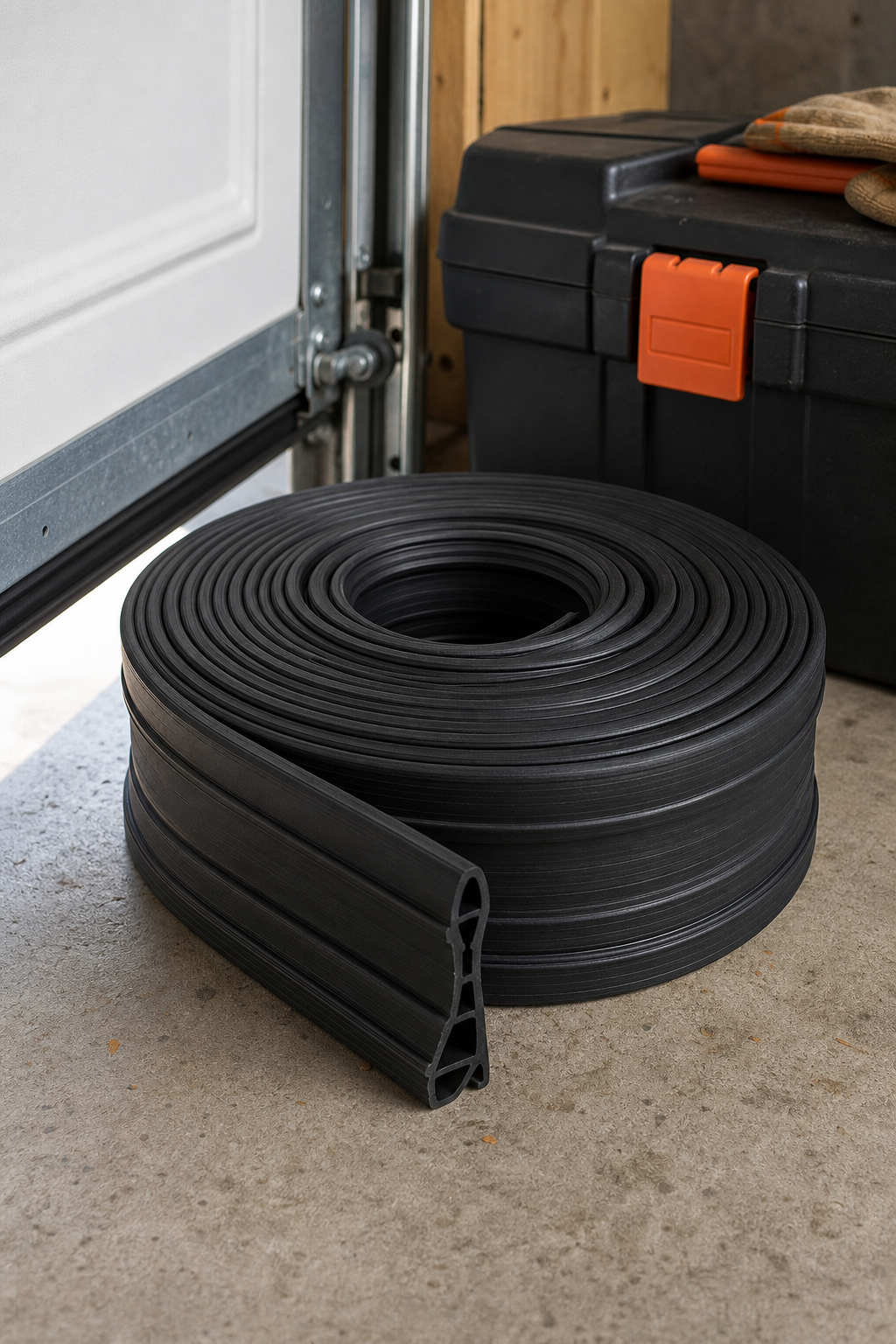
For door sweeps (the flat rubber strip with screws), position it so it hits the floor evenly. Pre-drill holes and secure with screws every 6-8 inches. Make sure the sweep compresses slightly when the door closes, not too tight or too loose.
For perimeter seals (sides and top), nail or screw them into the door frame. The flexible rubber should touch the door's edge when it's closed. Trim any overlap with scissors.
If you bought a DURA-LIFT-style seal, it usually snaps into place without hardware. Just press it into the track until it locks.
Key Takeaway:For cold climates, a smooth installation that leaves no gaps is more important than fancy features. Even the best seal fails if it's installed wrong.
Step 5: Test and Adjust the Seal
Close the garage door and check for light coming through. Shine a flashlight underneath and around the edges while someone stands inside. Any light means a gap. You can adjust by either tightening screws, adding a threshold seal on the floor, or replacing the seal with a thicker one.
Also test the seal's flexibility in cold weather. If it's already installed during a mild spell, wait for a cold night. A good seal should still compress and spring back. If it stays hard and doesn't bounce, consider upgrading to EPDM.
Check the auto-reverse function. Some thick seals can trip the safety sensor. Adjust the limit settings on your opener if needed.
Step 6: When to Call a Professional (LGFMH Construction)
Some garage doors are oversized, have custom hardware, or suffer from alignment issues. If your door is heavy or the track is damaged, let a pro handle it. LGFMH Construction specializes in interior and exterior repairs and replacements, including garage door weather seal installation. Their team will measure, choose the right material, and ensure a perfect fit that lasts through the harshest winters.
Professional seal replacement is recommended when seals show signs of cracking, water damage, or pet intrusion. Attempting a DIY fix on a misaligned door can lead to bigger headaches, and wasted money on seals that won't work. LGFMH Construction has the tools and experience to fix it right the first time.
If you live in the Virginia Beach area and want a garage door that's truly sealed against cold, contact LGFMH Construction's repair service for a consultation. They also offer roof, gutter, and siding repairs, so they can handle the whole exterior envelope.
Remember, a professionally installed weather seal not only stops drafts but also saves on energy bills and protects your garage from moisture and pests. It's a small investment that pays off every winter night.
FAQ
What is the best garage door weather seal for extreme cold?
The best is an EPDM rubber seal with a T-style or bulb design. It stays flexible down to -40°F. The DURA-LIFT Double-T Rubber seal has an explicit extreme-temperature claim and a 1-year warranty. For most cold climates, that's your top pick.
Can I use a vinyl garage door seal in cold weather?
Vinyl works down to about 20°F. Below that it gets brittle and cracks. If your winter temps drop below 0°F, choose EPDM or another cold-weather seal material. Vinyl is fine for mild winters but not for the harsh stuff.
How do I measure my garage door for a new weather seal?
Measure the width of the door opening from inside the track. Also measure the gap between the door bottom and the floor when closed. For T-style seals, note the T-nub size (1/4 or 5/16 inch). If you're unsure, take a sample to the store or order a sample pack.
How often should I replace my garage door weather seal?
Every 2-3 years in most climates. If you see cracks, gaps, or water stains inside your garage, replace it sooner. In cold climates, check every winter for hardening, rubber lasts longer than vinyl.
Do weather seals come with temperature ratings?
Most do not. A 2026 product survey found that 0% of 14 top seals listed a temperature rating or R-value. You have to infer from the material: EPDM rubber handles extreme cold; vinyl does not. Look for specs like '-40°F' in product descriptions.
Should I hire a professional to install a garage door weather seal?
If your door is heavy, misaligned, or you see damage to the track, call a pro. Companies like LGFMH Construction have the tools and experience to get it right. DIY is fine for standard doors, but a mistake can mean wasted money and ongoing drafts.
Conclusion
Don't overthink it: for cold climates, choose EPDM rubber with a T-style design. Measure carefully, install it right, and test for gaps. If that sounds like too much work, letLGFMH Constructionhandle it, they know exactly how to seal a garage door for a Virginia Beach winter. Your heating bill will thank you.


Comments