How to Repair a Cracked Pool Deck: A Step-by-Step Guide
- William McKracherne
- 4 days ago
- 9 min read

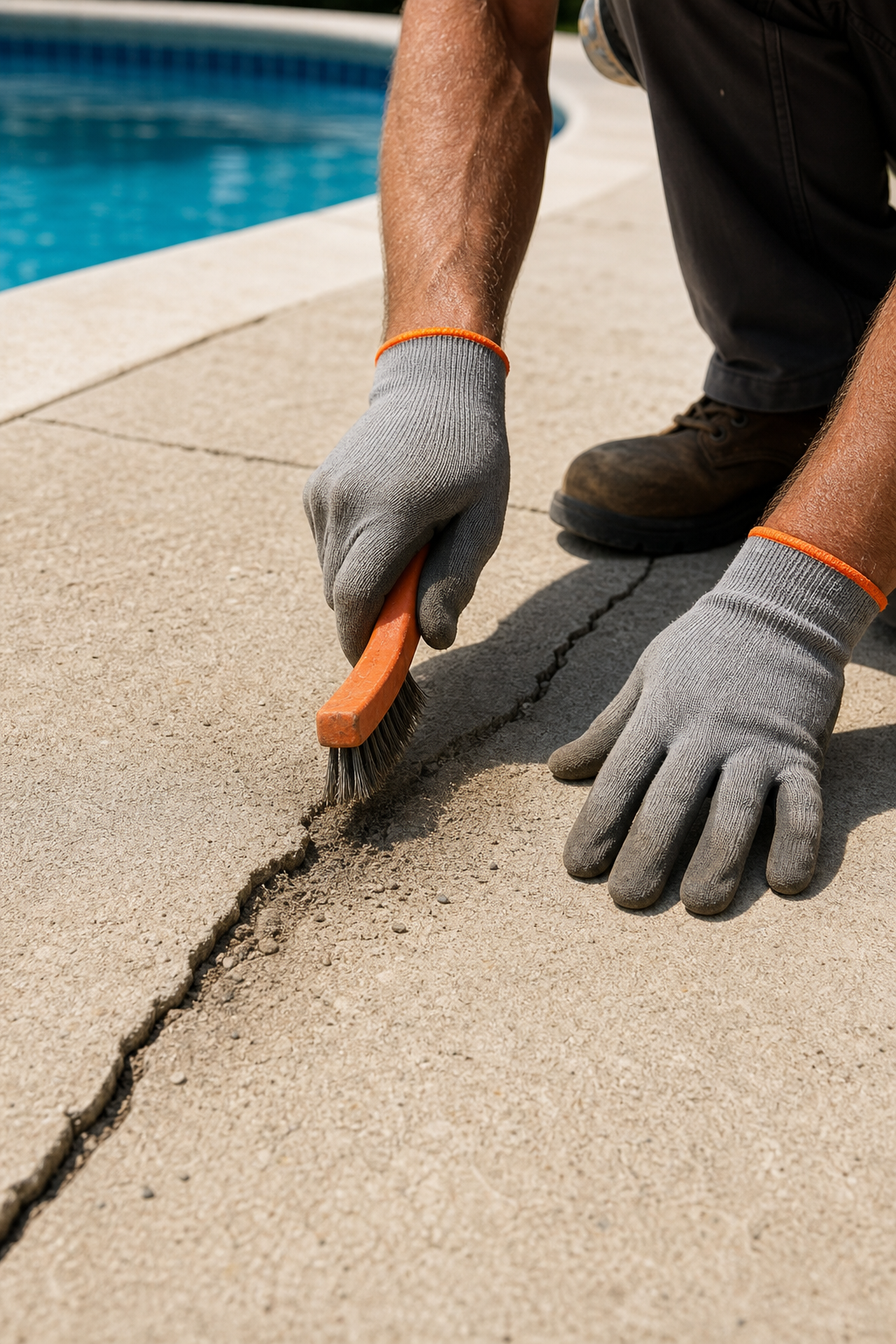
You walk out to your pool on a hot day and notice a crack running through the deck. Your first thought might be expensive repairs or even a full replacement. But the truth is, most cracks can be fixed yourself with the right tools and a little know-how. Whether it's a small hairline crack or a larger damaged area, knowing how to repair a cracked pool deck will save you money and keep your backyard looking great. In this guide, we'll walk you through five simple steps: assess the damage, clean the area, apply filler, resurface if needed, and seal the deck. You'll learn exactly what to do at each stage.
Step 1: Assess the Crack and Determine Repair Method
Before you start mixing anything, you need to figure out what kind of crack you're dealing with. Not all cracks are the same. Some are just surface deep, while others go all the way through the concrete. The way you repair a cracked pool deck depends on the type and size of the damage.
First, look at the crack. Is it thin like a hair? Or is it wide enough to fit a quarter? Hairline cracks (less than 1/8 inch) are usually surface issues. They happen from the concrete shrinking or from small shifts in the ground. These are easy to fix with a simple filler. Wider cracks (1/8 to 1/4 inch) might need a thicker patch. And cracks wider than 1/4 inch could mean bigger problems underneath, like soil movement or a bad base.
Check if the crack is level. Put a straight edge across it. If both sides are even, the crack is likely just a surface crack. If one side is higher, that means the concrete has moved. That needs more than just filling , you might need to lift or replace sections. on fixing a cracked pool deck, you should also look for signs of spalling (flaking) or scaling around the crack. That tells you the surface layer is damaged.
Here's a quick table to help you decide what to do:
Crack Width | Likely Cause | Repair Method |
< 1/8 inch | Shrinkage, minor settling | Concrete crack filler or epoxy injection |
1/8 – 1/4 inch | Moderate ground movement | Epoxy or polyurea filler, possibly resurfacing |
> 1/4 inch | Structural issue | Consult a professional; may need slab jacking or replacement |
Key Takeaway:Always measure the crack width and check for vertical displacement before choosing your repair method.
For deeper cracks, you might need to route them out , widen the top slightly , so the filler can grab better. Use a concrete chisel or an angle grinder with a diamond blade. Just be careful not to make the crack wider than needed. And always wear a dust mask and goggles.
If you're unsure about the severity, professional repair services like LGFMH Construction can inspect the deck and give you advice. Sometimes what looks like a small crack is actually a sign of a bigger problem, like a hollow area underneath.
Step 2: Clean and Prepare the Crack Area
Now that you know what kind of crack you have, it's time to clean it out. A clean crack lets the filler stick properly. If you skip this step, the repair will fail quickly. Dirt, dust, old sealant, and algae will stop the bond.
Start by removing any loose debris. Use a wire brush or a stiff nylon brush to sweep out the crack. Then vacuum the crack with a shop vac to get the fine dust out. For a really clean surface, you can use a pressure washer on low setting. But be careful , too much pressure can widen the crack or damage the edges. According to GPS Pool Store's concrete pool deck cleaning guide, a mix of water and mild detergent works well to remove grease or oil stains that might harm adhesion.
If there's any old caulk or filler in the crack, scrape it out with a putty knife or a chisel. You want the crack to be open and clean all the way down. For cracks that are deep, use a narrow chisel or a crack chaser bit on your grinder to create a V-shaped groove. This gives the filler a better mechanical bond.
After cleaning, rinse the crack with water and let it dry completely. Or you can use a damp sponge to dampen the area if the filler requires a moist surface (some epoxies do). Check the instructions on your filler. Most concrete fillers work best when the surface is slightly damp, but not wet. Standing water will prevent adhesion.
Once the area is clean and prepped, don't wait too long. Dust can settle back in within hours. If you can't apply the filler right away, cover the crack with tape or plastic.
Step 3: Apply Concrete Crack Filler or Epoxy
Now you're ready to fill the crack. Choose a filler that matches your crack size and deck type. For hairline cracks, a liquid concrete crack filler works well. For wider cracks, use a thickened epoxy or a polymer-modified patching compound. E-Z Patch 2 Pool Deck Repair is an example of a product designed for this job, available in multiple colors.
Follow the manufacturer's instructions carefully. For epoxy kits, you usually mix resin and hardener together. For premixed fillers, stir well before use. Many products come with a liquid cement bonder that you add to the dry mix. For example, with E-Z Patch 2, you mix the dry powder with water and the included liquid bonder to get a consistency like stiff mashed potatoes.
Use a putty knife or a trowel to press the filler into the crack. Push it deep , don't just smear it on top. Overfill slightly, because the filler will shrink when it dries. For wide cracks, apply in layers. Let each layer dry according to the product's recommendation before adding the next. This prevents the filler from sinking.
Pro Tip:For the best bond, apply a primer or bonding agent to the crack walls before filling. This is especially important for epoxy repairs on smooth cuts.
After applying, smooth the surface with a damp trowel or sponge to match the surrounding deck texture. Remove any excess before it dries. For textured decks like Kool Deck, use a damp sponge or a texture brush to recreate the pattern. Let the repair dry for at least 24 hours before walking on it, and up to 3 days for furniture.
Color matching can be tricky. Some products come in 24+ colors. If you're not sure, order a sample or email a photo to the manufacturer. You can also paint the entire deck later to hide mismatches.
Step 4: Resurface the Deck (if needed)
If your deck has multiple cracks, spalling, or an uneven surface, resurfacing is the best option. Resurfacing means applying a thin layer of concrete overlay over the entire deck. This hides all the small cracks and gives you a fresh, uniform look. It's also a good time to update the color or texture.
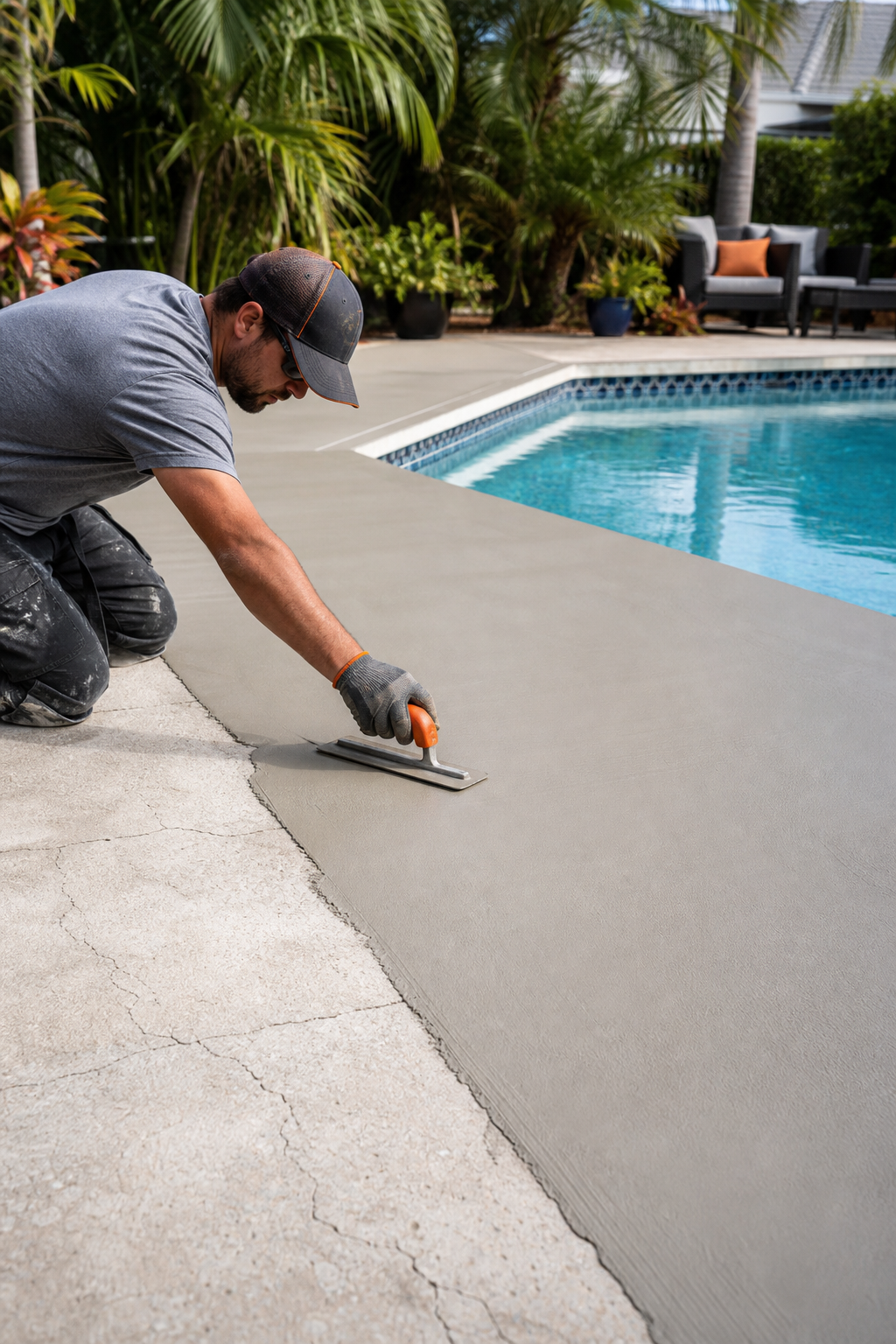
First, clean the entire deck thoroughly. Pressure wash it to remove all dirt, oil, and old sealant. Then repair any large cracks or holes as described in Step 3. Let those repairs cure. Next, mix the resurfacer according to the package directions. Pour it onto the deck in small sections and spread it with a long-handled squeegee or a trowel. Work quickly because the resurfacer sets fast.
For textured finishes, you can use a broom or a texture roller on the wet material. Some people prefer a smooth finish for easier cleaning. Whichever you choose, make sure the resurfacer is consistent across the whole deck. Overlap your strokes to avoid lines.
Watch for bubbles or pinholes. If you see them, go over the area with a trowel or a roller to pop them. Let the resurfacer dry for 24 hours, then check for any low spots. You can apply a second coat if needed.
Resurfacing is a big job but very rewarding. It can make your old deck look brand new. However, it only works if the underlying concrete is solid. If you have major structural issues, resurfacing won't fix them. This video from YouTube shows the process step by step.
Step 5: Seal and Cure the Deck
Sealing is the final step in learning how to repair a cracked pool deck. A good sealer protects the repaired areas from water, UV rays, and pool chemicals. It also makes the deck easier to clean. Without a sealer, your repair might crack again within a year.
Choose a sealer made for concrete pool decks. Acrylic sealers are popular because they're affordable and easy to apply. Polyurethane or epoxy sealers offer more durability but cost more. W.R. Meadows' guide on choosing a concrete pool deck sealer recommends considering slip resistance, especially near water. Some sealers include a slip-resistant additive.
Before sealing, let the repaired areas cure. Concrete needs 28 days to fully cure, but most sealers can be applied after 7 days if the weather is good. Make sure the deck is clean and dry. Apply the sealer with a roller or sprayer. Two thin coats are better than one thick coat. Let the first coat dry for a few hours, then apply the second.
During curing, keep people and furniture off the deck. Check the sealer's instructions for foot traffic wait time , usually 24 hours. For furniture, wait at least 3 days. Pool chemicals can also affect the cure, so avoid splashing water on the deck for the first week.
Regular maintenance extends the life of your repair. Sweep the deck often and reapply sealer every 2-3 years. This forum discussion on concrete pool deck sealers highlights that some sealers may yellow over time, so choose a UV-stable product for sunny areas.
FAQ
How long does a pool deck crack repair last?
A properly done repair can last 5-10 years or more. It depends on the quality of materials, the severity of the original crack, and how well you maintain the deck. Sealing the deck and fixing any new cracks quickly extends the life. Most repair products, like E-Z Patch, have a 28-day cure for full strength.
Can I repair a cracked pool deck in cold weather?
It's not recommended. Concrete fillers and sealers need temperatures above 50°F to cure correctly. In cold weather, the materials may not bond well and could crack again. If you must repair in cooler months, choose a product that can handle lower temps and keep the area warm with a heater.
Do I need to resurface the whole deck or just patch cracks?
If you have only a few small cracks, patching is fine. If the deck has many cracks, spalling, or an uneven surface, resurfacing gives a better result. Resurfacing also prevents future cracks by adding a uniform layer. But it costs more than spot repairs. Assess the overall condition first.
What is the best filler for hairline cracks on a pool deck?
For hairline cracks (under 1/8 inch), a liquid concrete crack filler works best. It seeps into the crack and bonds. Some products come in a squeeze bottle with a narrow tip. For textured decks, a polymer-modified patching compound that can be tinted to match is a good choice. Always check if it's safe for pool areas.
How do I match the color of the patched area to the rest of the deck?
Many repair products come in multiple colors. Send a photo or a small sample to the manufacturer for matching. If you can't match perfectly, you can paint the entire deck after repairs. Some people accept a slight color difference since it will be hidden under furniture or after cleaning.
Can I use regular concrete to repair a pool deck crack?
Regular concrete is not recommended for thin crack repairs. It shrinks too much and won't bond well. Use a specialty concrete crack filler or epoxy. These products are designed to adhere to existing concrete and resist water. For larger areas, a polymer-modified repair mortar is better.
How long should I wait before using the pool after sealing?
Most sealers require 24-48 hours before light foot traffic and at least 3 days before furniture is placed back. Full cure can take up to 7 days. Avoid splashing pool water on the deck during that time. Check the sealer manufacturer's instructions for exact wait times.
Is it cheaper to repair or replace a cracked pool deck?
Repairing is almost always cheaper than replacing. A full deck replacement can cost thousands of dollars. Resurfacing costs about half of replacement. Spot patching is even less. However, if the concrete is severely cracked or sinking, replacement might be necessary. Get a professional evaluation.
Conclusion
Fixing a cracked pool deck is a manageable DIY project if you follow the right steps. Start by assessing the crack size and type. Clean the area thoroughly so the filler sticks. Use a good quality concrete crack filler or epoxy, and let it cure properly. If your deck has widespread damage, consider resurfacing for a fresh start. Finally, seal the deck to protect it from water and chemicals.
Remember that prevention is easier than repair. Seal your deck every few years and fix small cracks as soon as you see them. Regular maintenance keeps your pool area safe and attractive. If you're unsure about any step, especially with structural cracks, don't hesitate to call a professional. Companies like LGFMH Construction offer repair services that can assess and fix your deck quickly.
Now you have the knowledge to tackle cracked pool decks with confidence. Gather your tools, pick the right product, and get started. Your pool deck will look great again in no time.


Comments